

BYD has developed what it claims is the first plug-in hybrid powertrain system capable of running on biofuels, specifically designed for the Brazilian market where ethanol is widely used as an alternative fuel source.
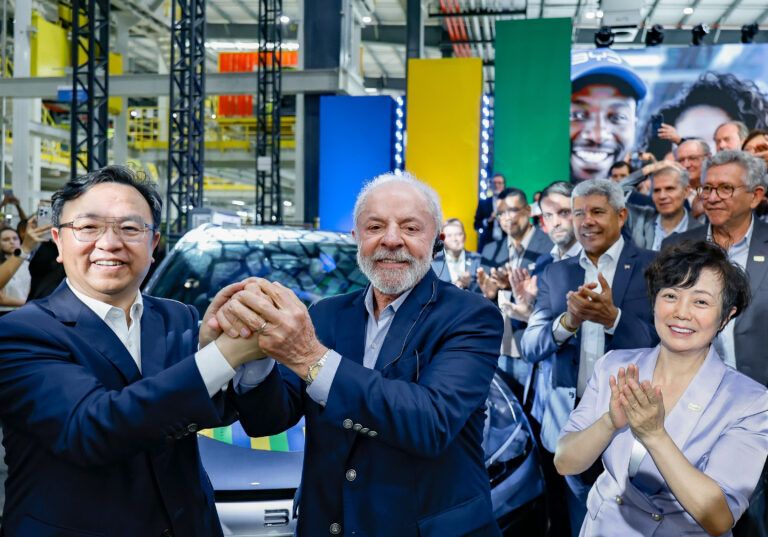
The technology was unveiled at the inauguration of BYD’s assembly plant in Camaçari, Brazil, where the company demonstrated the system in a special edition of its Song Pro model. The vehicle uses the company’s DM-i (Dual Mode Intelligent) architecture, similar to systems found in European models such as the Seal U DM-i and Seal 6 DM-i.
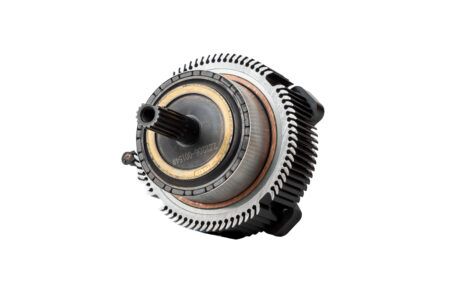
The key innovation is a modified version of the Super Hybrid system’s 1.5-litre engine that can operate on any mixture of petrol and ethanol. According to BYD, the engine was developed through collaboration between Chinese and Brazilian engineers over a two-year period, with more than 100 engineers involved in the project.
In the DM-i system, the combustion engine functions primarily as a generator to charge the battery rather than directly powering the wheels, even during hybrid operation. This allows the vehicle to maintain an electric driving experience while using the internal combustion engine for extended range.
Wang Chuanfu, BYD’s founder and CEO, said the development represented a solution tailored specifically for Brazil’s energy infrastructure. “After two years of effort by more than 100 Chinese and Brazilian engineers, today our 14 millionth vehicle rolls off the production line equipped with the world’s first plug-in hybrid engine dedicated to biofuel,” he said.
Wang added that the concept emerged during a visit to Brazil two years ago. “I realised the potential of ethanol. We then decided that we would bring our plug-in hybrid technology, but with a flex engine developed by and for this country,” he said.
Tyler Li, president of BYD Brazil, described ethanol as one of Brazil’s strategic advantages in the energy transition. “Incorporating it into our DM-i architecture represents a historic advance: we value the national renewable energy matrix, in addition to offering consumers a vehicle with greater efficiency, lower environmental impact, and aligned with the country’s energy reality,” he said.
The Camaçari facility, which began operations in July after 15 months of construction, has an initial production capacity of 150,000 vehicles annually, expandable to 300,000 units. BYD has announced plans to double this capacity to 600,000 vehicles per year. Thirty examples of the Song Pro COP30 edition will be donated to the UN climate summit scheduled to take place in Brazil.