


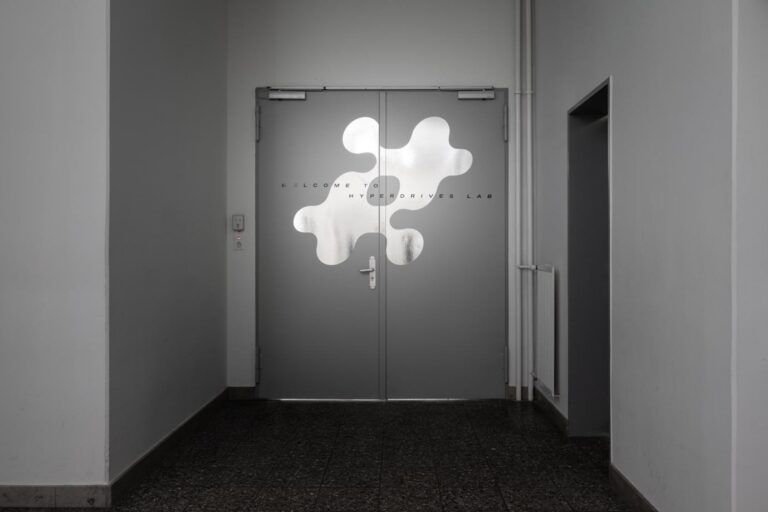
Munich-based Hyperdrives has opened a new headquarters and engineering facility in the city’s Obersendling district, six times larger than its previous site. The company develops hollow-conductor cooling technology, running dielectric fluid through motor windings to remove heat at source, serving automotive, marine and aviation OEMs.
Munich, Germany-based electric propulsion company Hyperdrives has opened a new headquarters and engineering facility in the city’s Obersendling district, expanding its capacity for engineering, testing and validation work.
The new site spans almost 600 square meters, around six times the size of the company’s previous facility in Munich’s Giesing district. It brings together engineering offices, electronics laboratories, testing infrastructure, prototyping workshops and collaborative workspaces.
Hyperdrives develops direct hollow-conductor cooling technology for electric motors, in which a dielectric fluid flows through hollow copper conductors within the motor winding to remove heat at its source, rather than at the motor’s surface. The company says the approach reduces the size, weight and material use of electric drive systems while retaining the hairpin winding architecture and manufacturing processes already used across the industry.
The company is working with several global original equipment manufacturers (OEMs) and suppliers across the automotive, off-highway, marine and aviation sectors to develop electric propulsion systems using the technology.
Office, engineering and laboratory space at the new facility is already operational, with further laboratory and validation fit-out work continuing over the coming months, according to Hyperdrives. The site has also been designed to accommodate a future pilot manufacturing line for the company’s hollow-conductor stator technology.
According to Robin Renz, chief executive and co-founder at Hyperdrives, the previous office was where the company proved the technology, while the new headquarters is where it builds the capabilities to scale it. “It gives our engineers the space and infrastructure to develop, prototype and validate complete systems at the level required for larger customer programs – and creates the foundation for our next stage of industrialization,” Renz said.
Renz added that the technology was designed from the outset for industrial-scale production, and that the move is part of building the company around that principle. “We now have the room to grow the team, expand our validation capabilities and prepare for pilot manufacturing while keeping the speed and flexibility that got us here,” he said.