

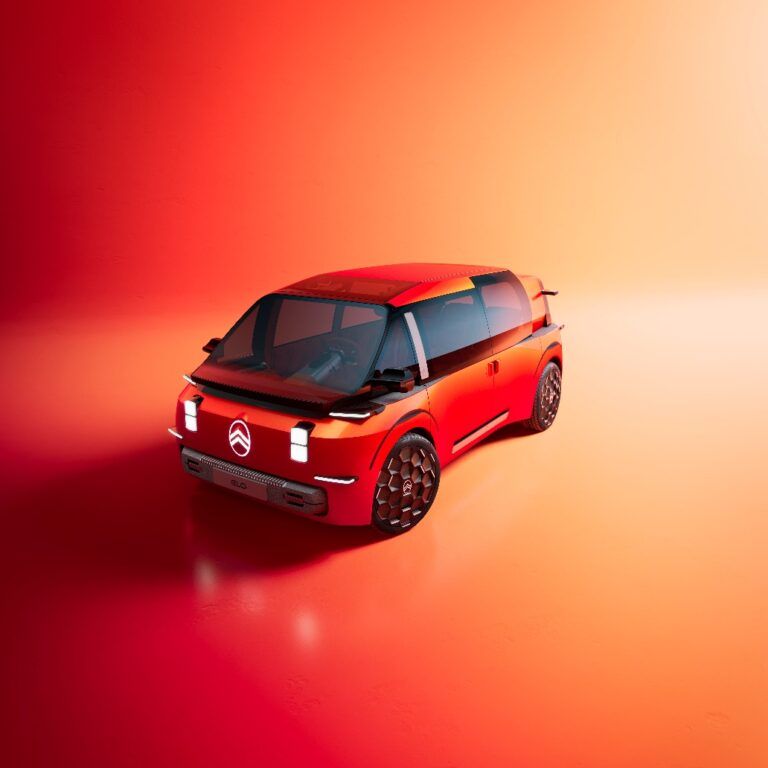
JSP has collaborated with Citroën on the ELO electric concept, supplying ARPRO expanded polypropylene components for exterior protective and functional elements. The lightweight, recyclable closed-cell foam was density-tailored for impact management while supporting weight targets on the 4.10-meter concept’s dedicated rear-motor EV platform.
Japanese materials specialist JSP has collaborated with Citroën on the automaker’s ELO electric concept, supplying expanded polypropylene (EPP) components across protective and functional exterior elements to support the vehicle’s lightweight architecture.
The ELO concept, revealed in December and since shown in Brussels and Paris, is built on a dedicated battery electric platform with a rear-axle motor, flat-floor packaging, and minimal front instrumentation. Within a 4.10-meter footprint, the cabin features a central driving position with 360-degree seat rotation, removable rear chairs, and reconfigurable fixtures — a layout Citroën designed around what it calls REST-PLAY-WORK versatility.
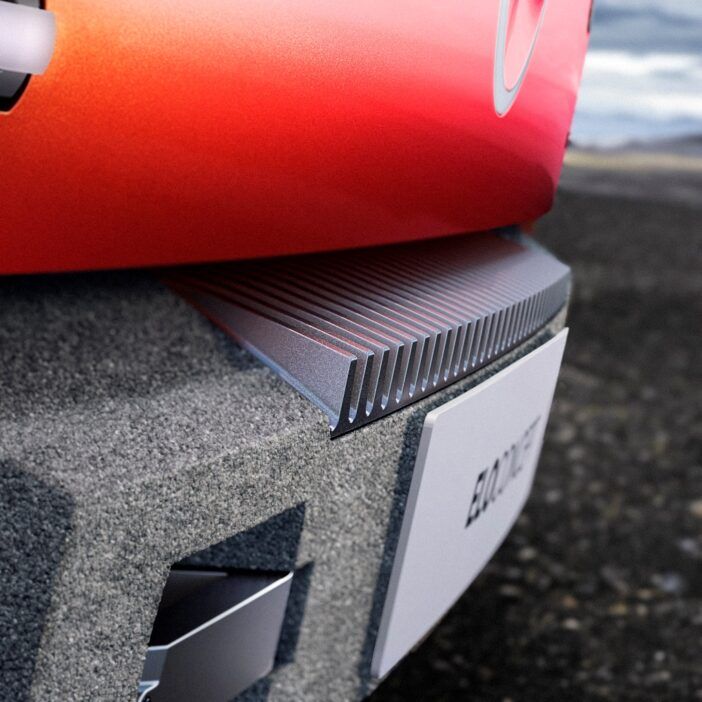
JSP’s ARPRO closed-cell bead foam was selected for its energy-absorption-to-mass ratio, specific stiffness, dimensional stability under cyclic loading, and surface integrity suited to repeated reconfiguration. The company says density tailoring allowed targeted impact management while preserving weight reduction targets tied to the ELO’s efficiency-focused platform.
From a sustainability standpoint, ARPRO’s recyclability and reduced material footprint aligned with Citroën’s design brief. JSP’s Innovation Centre produced high-precision prototypes used by the Citroën Style team to validate geometry, tolerance stack-ups, finish quality, and mechanical behavior ahead of the concept’s public debut.
“We are very proud of ELO because it is the perfect expression of what design should be: combining style and function, to enjoy an intense and rich life,” says Pierre Leclercq, style director at Citroën. “ELO is a bubble of energy, both in terms of its colourful and endearing personality and its modernity and versatility.”
The collaboration illustrates how early-stage material selection, density optimization, and prototype validation can accelerate concept-to-demonstrator timelines for compact electric vehicle architectures.