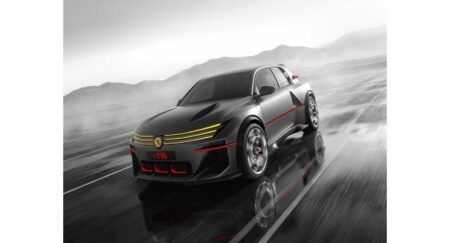


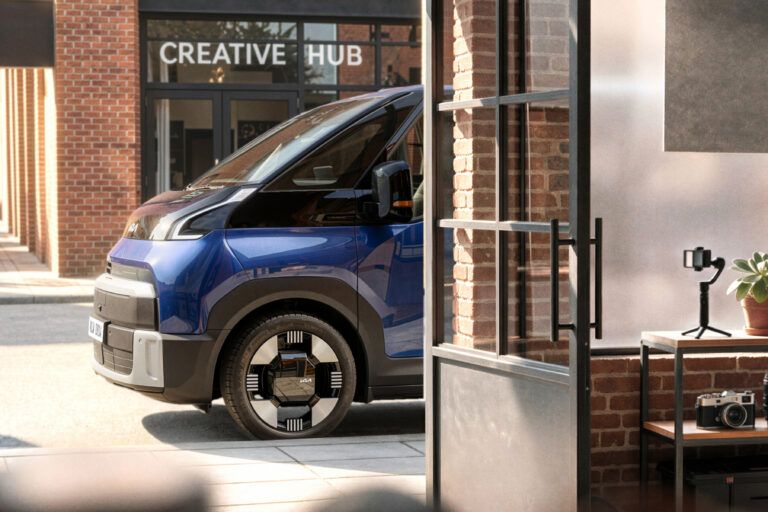
Kia has released teaser images of the PV7, its second all-electric Platform Beyond Vehicle, ahead of its global debut at IAA Transportation in Hannover on September 14, 2026. The PV7 extends Kia’s PBV lineup into the light commercial vehicle segment, built on the E-GMP.S platform alongside the existing PV5.
Kia Corporation has released teaser images and video of the Kia PV7, its second dedicated all-electric Platform Beyond Vehicle (PBV) model, ahead of the vehicle’s global debut at IAA Transportation in Hannover, Germany, on September 14, 2026.
The PV7 extends Kia’s PBV lineup into the light commercial vehicle (LCV) segment, offering more space and capability than the PV5, the brand’s first PBV model. Kia says the PV7 is aimed at business customers across a broader range of commercial and lifestyle uses.
The teaser images show the PV7 in a range of everyday settings intended to demonstrate its adaptability across different work and lifestyle scenarios. The vehicle has a one-box profile, with a black hood and pillar garnish contrasting against the body color, alongside the front and rear lamp graphics Kia uses across its PBV range.
The PV7 is built on Kia’s dedicated E-GMP.S platform, the same architecture underpinning the PV5. Kia describes the PV7 and its future derivative models as a key part of its wider PBV strategy.
IAA Transportation, described by Kia as the world’s leading commercial vehicle exhibition, runs from September 15-20, 2026, with a press day on September 14. Alongside the PV7 debut, Kia will show a range of PV5 derivatives at the event, including the PV5 Cargo L2/H2, PV5 Cargo L1/H1, PV5 Chassis, PV5 Passenger 7-seat, PV5 WAV (Wheelchair Accessible Vehicle) and PV5 Food Truck, intended to demonstrate the platform’s flexibility across different business applications.
Kia says the PV5 lineup, which launched in 2025, was designed around usability and efficiency in commercial operation, citing a tight turning radius for urban use, a low cargo loading height to reduce operator strain, and modular body architecture intended to simplify repairs and reduce vehicle downtime.