
Electric & Hybrid Vehicle Technology International
  • News
    • A-F
      • Battery Energy Storage Systems
      • Battery Technology
      • Buses & Commercial Vehicles
      • Charging Technology
      • Concept Vehicle
      • Electrification Strategies
      • Fuel-cell Technology
    • G-K
      • Hybrid Powertrain
      • Hybrid Architecture
      • Industry News
      • Joint Ventures
    • L-Q
      • Manufacturing
      • Materials Research
      • Motor Technology
      • Motorsport Electrification
      • OEM News
      • Powertrain Components
      • Pure-Electric Powertrain
    • R-Z
      • Range Extender
      • Solid-State Battery Technology
      • Testing
      • Transmissions
  • Features
  • Online Magazines
    • New issue available now! August 2026
    • March 2026
    • September 2025
    • June 2025
    • March 2025
    • Nov / Dec 2024
    • Archive Issues
    • Subscribe Free!
  • Technical Articles
  • White Papers
  • Subscribe Free
    • Free Email Newsletters
    • Subscribe to Magazine
  • Opinion
  • Supplier Spotlight
  • Webinars
  • Events
  • Podcasts
LinkedIn YouTube X (Twitter)
Subscribe to Magazine SUBSCRIBE TO EMAIL NEWSLETTER MEDIA PACK
LinkedIn
Login
Electric & Hybrid Vehicle Technology International
  • News
      • BESS
      • Battery Technology
      • Buses & Commercial Vehicles
      • Charging Technology
      • Concept Vehicle
      • Electrification Strategies
      • Fuel-cell Technology
      • Hybrid Powertrain
      • Hybrid Architecture
      • Industry News
      • Joint Ventures
      • Manufacturing
      • Materials Research
      • Motor Technology
      • Motorsport Electrification
      • Opinion
      • OEM News
      • Powertrain Components
      • Pure-Electric Powertrain
      • Range Extender
      • Solid-State Battery Technology
      • Testing
      • Transmissions
  • Features
  • Online Magazines
    1. New issue available now! August 2026
    2. March 2026
    3. September 2025
    4. June 2025
    5. March 2025
    6. Nov / Dec 2024
    7. Archive Issues
    8. Subscribe Free!
    Featured
    August 10, 2026

    New issue available now! August 2026

    Online Magazines By Web Team
    Recent

    New issue available now! August 2026

    August 10, 2026

    New issue available now! March 2026

    March 19, 2026

    New issue available now! September 2025

    September 9, 2025
  • Technical Articles
  • White Papers
  • Podcasts
  • Supplier Spotlight
  • Webinars
  • Events
LinkedIn
Electric & Hybrid Vehicle Technology International
Battery Technology

Lithium-CO₂ battery catalyst made from iron and molybdenum avoids platinum and iridium

WebteamBy WebteamNovember 12, 20263 Mins Read
Share LinkedIn Twitter Facebook Email
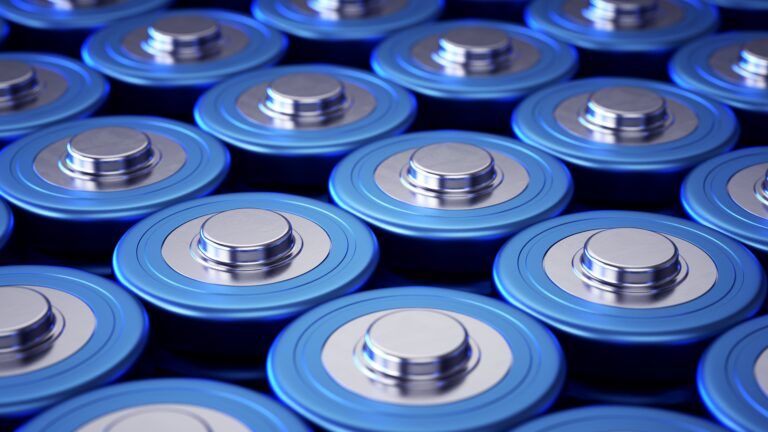
Surrey researchers develop iron-based lithium-CO₂ battery catalysts that rival precious-metal designs in lab tests. (image Adobe Stock)

University of Surrey researchers have developed iron- and molybdenum-based catalysts for lithium-CO₂ batteries. In lab tests, the best material, made by heating to 500°C, achieved almost four times a reference material’s discharge capacity, recovered 93% of charge and completed 92 cycles without precious metals. Published in the Journal of Power Sources.

Researchers at the University of Surrey have developed iron-based catalysts for lithium-carbon dioxide (Li-CO₂) batteries that performed as well as, or better than, previously reported precious-metal catalysts in laboratory tests.

The team at the [Guildford, UK-based] university says the catalysts, which use iron and molybdenum, could reduce the technology’s reliance on scarce and expensive metals such as platinum, ruthenium and iridium. The research is published in the Journal of Power Sources.

In lab testing, the best-performing material delivered almost four times the discharge capacity of an unmodified reference material. It recovered 93% of the electrical charge during recharging and completed 92 charge-discharge cycles under conditions in which the charge released in each cycle was deliberately limited.

Li-CO₂ batteries are being investigated as an alternative to lithium-ion technology because they could store more energy for a given weight. The chemistry is still at an early stage, with charging efficiency, reliability and service life yet to be resolved. Developing catalysts to support the charge and discharge reactions is one of the obstacles.

According to Dr. Siddharth Gadkari, senior lecturer in chemical engineering at the University of Surrey and a corresponding author of the paper, the work addresses one of those barriers. “Lithium-CO₂ batteries have the potential to store substantially more energy than today’s lithium-ion batteries, which could eventually mean longer-lasting electronic devices and electric vehicles that travel further without increasing battery weight,” he says. “Our research tackles one of the key barriers preventing these batteries from reaching that potential. We’ve shown that strong battery performance is possible without relying on expensive precious metals, opening up a promising route towards a new generation of more affordable and sustainable batteries.”

To make the catalysts, the team added iron to a molybdenum-based compound and heated the material at a range of temperatures to study how changes in its structure affected performance. Heating to 500°C (932°F) gave the best results, producing a combination of molybdenum oxide and iron phosphate that the researchers say helped the charge and discharge reactions.

“We found that even relatively simple changes to how these materials are prepared can make a big difference to how well they perform,” says lead author Dr. Mahsa Masoudi, a research fellow at the university’s School of Engineering. “The temperature we used changed the structure of the catalyst, and that had a significant impact on how efficiently the battery could charge and discharge. Understanding why those changes matter gives us a valuable starting point for improving these batteries further.”

The researchers say further work is needed to determine whether the materials can maintain their performance over longer periods and under more demanding operating conditions.

“There’s still a long way to go before we see lithium-CO₂ batteries in everyday devices, but these results are an encouraging step forward,” says Dr. Daniel Commanduer, a lecturer at the university and a corresponding author. “We’ve shown what these materials can achieve in the lab, and the next challenge is making sure they can deliver that performance consistently over much longer periods.”

The team plans to work on improving catalyst performance and durability, and to examine whether the materials could be used in other technologies that convert carbon dioxide.

Share. Twitter LinkedIn Facebook Email
Previous ArticleFEATURE: Motorsport cooling meets mainstream cells
Webteam

Related Posts

Battery Technology

FEATURE: Motorsport cooling meets mainstream cells

November 12, 20266 Mins Read
Charging Technology

BYD launches solar-powered FLASH Charging site with robotic charging arm in Abu Dhabi desert

November 12, 20263 Mins Read
Motor Technology

ZF’s 30,000rpm 3-in-1 e-drive halves magnet mass and is nearly 25% smaller and lighter

November 12, 20263 Mins Read
Latest Posts

Lithium-CO₂ battery catalyst made from iron and molybdenum avoids platinum and iridium

November 12, 2026

FEATURE: Motorsport cooling meets mainstream cells

November 12, 2026

BYD launches solar-powered FLASH Charging site with robotic charging arm in Abu Dhabi desert

November 12, 2026
Our Social Channels
  • YouTube
  • LinkedIn
Getting in Touch
  • Free Email Newsletters
  • Meet the Editors
  • Contact Us
  • Media Pack
FREE WEEKLY NEWS EMAIL!

Get the 'best of the week' from this website direct to your inbox every Thursday


© Copyright 2026 Mark Allen Group. All rights are reserved, including those for text and data mining, AI training, and similar technologies.
  • Cookie Policy
  • Privacy Policy
  • Terms & Conditions

Type above and press Enter to search. Press Esc to cancel.

Sign In or Register

Welcome Back!

Login to your account below.

Lost password?