

RML Group has evolved its VarEVolt battery modules around 21700 cylindrical cells, combining motorsport-derived immersion cooling with a flexible, cell-agnostic architecture for passenger car HEV and BEV applications. The company tell EHV how a background in motorsport-honed thermal management has informed its expanded VarEVolt battery range and delivered future-proofed power.
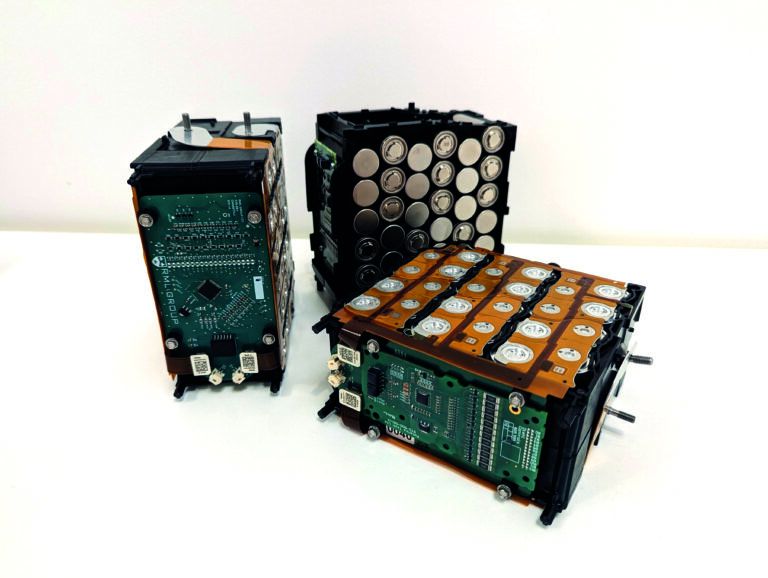
RML Group has added to its VarEVolt battery range to suit passenger car HEV and BEV applications. Drawing on its extensive experience in motorsport, RML’s thermal management knowledge forms a core part of the module design to support fast charge and discharge cycles.
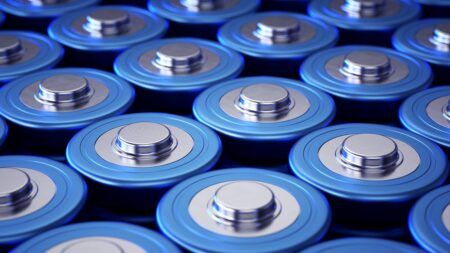
“We have evolved the range to accommodate 21700 cells,” says Denis Gorman, head of powertrain at RML Group says. “Hitherto we’ve used an atypical cylindrical cell which, whilst offering massive charge and discharge power, limited us to a particular power-focused cell. We’ve now created a version based around 21700 cells, opening a much bigger range of cells to choose from.”
There are specific benefits to utilizing 21700 cells: “We get all the flexibility that 21700s offer, including the ability to trade between power density, energy density and cost.,” says Gorman. “This means we have a VarEVolt to suit high power track HEVs, long range BEVs, cost-conscious applications, and everything in between.”
One of the first deployments of RML’s new VarEVolt technology was in collaboration with Shell on its Triple 10 Challenge car. The city car concept was designed to charge in under 10 minutes, deliver an economy of 10km/kWh and have a 10-tonne CO2e life cycle footprint. RML led on the battery pack architecture, using Shell’s dielectric fluid in the thermal management system.
“It’s using reasonably off the shelf, standard cells but because we’re still immersion cooling it – we’ve carried that technology forward – we’re able to charge it from 10 to 80% in under 10 minutes,” says Gorman. “It’s taking that motorsport, supercar knowledge and applying it to passenger car and other applications.”
Unlike other EVs that can minimize charging times with access to ultra-fast 300kW chargers, the Triple 10 Challenge car only requires a 175kW charger to take it from 10 to 80% in less than 10 minutes. The proof of concept demonstrates the capability of the battery and cooling technology working within the constraints of existing infrastructure.
While RML’s previous module configuration featured 24 cells, the Shell project design featured 120 cells in a module. The cells also had twice the capacity of the cells RML used prior. The company leveraged its immersion cooling expertise to optimize flow strategies and directions to balance flow effectively across the entire module.
Maximizing flexibility
Depending on the application, the new modules allow RML to more easily adapt the specification to suit required performance characteristics. “Being a 21700-based module, we can pick really energy dense cells, or power dense cells,” says Gorman. “It seems like the market is heading towards having both, presumably through silicon doping and a few other things. We’re also primed for the emerging trend of cells which offer both high power and energy.”
RML’s original module was a 12S2P. “But we’ve now got a 24S1P version of it and a 6S4P version of it,” says Gorman. “For that same 24 cells, we can change the voltage or the capacity depending on the application. That’s all using that really ultra-high-performance motorsport-esque cell. For our newer 21700-based modules, we’ve started off with a 12S10P, so still a sub 60V module but we’ve also developed a 6S20P version of it, again sub 60V but with a higher capacity. You could chain those together to get four 800V packs with different capacities. The number of cells is broadly fixed, then we’re just changing the busbar, letting the electrical layout meet the performance capacity needs of any given customer.”
The new architectures allow the team to quickly flex the module design by any factor of 120 with reasonably few engineering tweaks. This approach minimizes development risk for OEMs by allowing battery performance to evolve with advances in cell technology. Instead of redesigning the entire architecture, manufacturers can tailor specific chemistry, voltage and capacity parameters within a known module framework.
Thinking ahead
As well as bolstering its existing offering, the new VarEVolt modules were developed with future applicability in mind. “There’s two particular growth areas I see at the moment,” Gorman says. “HEVs is one, based on market sentiment; the focus on BEVs has softened, with consumers and manufacturers increasingly recognizing the appeal of hybrid powertrains. Motorsport continues with a lot of HEVs as well, although they’re also looking more towards sustainable fuels. Defense would be the other area that’s really growing. There are loads of small UAVs which need batteries. They’re pure BEVs but a lot of them are quite power dense.”
UAVs require high power for take-off, then lower power for the rest of the flight time creating a specific use profile that RML can accommodate. Gorman notes electrification is promoting more cross-pollination between different sectors where high power requirements can be addressed with the right battery specification.
“The other trend that’s come up recently,” Gorman continues, “is in cell technology. For years we saw small, incremental gains in energy and power capability. In the last couple of years, the pace of development seems to have increased and there’s suddenly a lot more cells on the market that are both high energy and high power. Moving to the 21700-based module allows us to keep afloat of all those developments as they’re coming in.”
RML’s VarEVolt modules work around any cylindrical cell format and following discussions with its suppliers, this was determined to be the best route forward. Many of its suppliers have clear five-year roadmaps which commit to their use and development of cylindrical cell formats, allowing RML to future-proof its offering for at least the next five years.
As Gorman notes, OEMs are looking to maximize both energy and power density, placing greater emphasis on flexibility to suit specific applications. Pairing its immersion cooling expertise with cell-agnostic module architectures, RML is in a strong position to adapt with emerging cell technologies and evolving vehicle requirements.