

BASF has introduced Oppanol N PLUS, a polyisobutene binder for next-generation EV batteries including solid-state cells. Acting in the cathode, anode, or electrolyte, it flexes with charge cycles and stays chemically inert. BASF highlights narrow specifications and 20kg pack sizes. The binder is presented at The Battery Show Europe, Stuttgart.
BASF has introduced Oppanol N PLUS, a polyisobutene (PIB) binder engineered for next-generation electric vehicle (EV) batteries, including solid-state cells.
The Ludwigshafen, Germany-based chemical company is presenting the product at The Battery Show Europe in Stuttgart, running June 9 to 11, 2026, at hall 5, booth A20. The launch coincides with the 95th anniversary of BASF’s Oppanol product family.
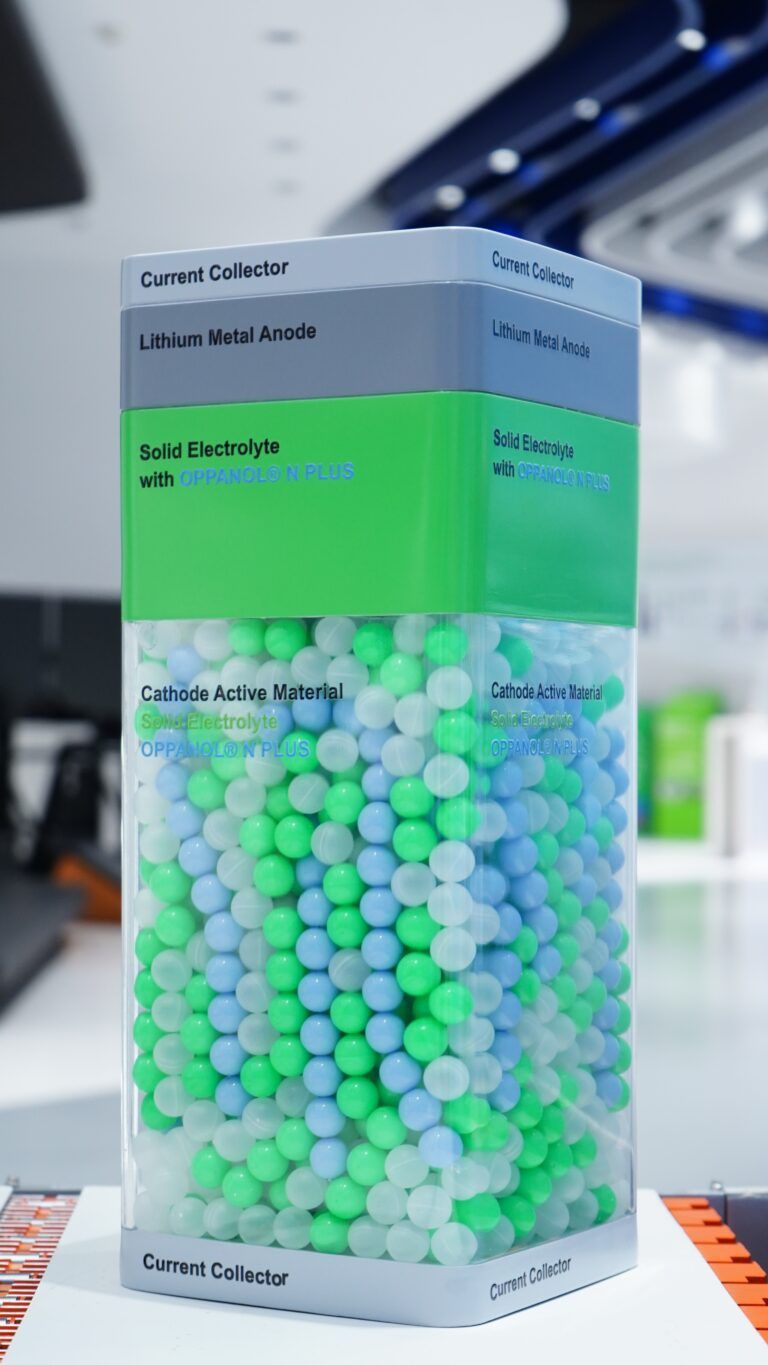
Oppanol N PLUS is based on BASF’s polyisobutene technology and functions as a binder in the cathode, anode, or electrolyte, holding the individual components together while keeping them separated. According to BASF, the material’s high elasticity and extensibility compensate for mechanical stress during charging and discharging, contributing to battery lifetime and stability, while its chemically inert nature prevents unwanted side reactions.
BASF says a key feature is the binder’s narrow specifications and consistent product quality. The company states this reduces variability in production processes, lessens the need for reformulation by the customer, lowers quality control efforts, and supports faster, more stable process adjustments. BASF is also offering material supplied directly from stock and more flexible delivery in smaller packaging sizes starting at 20 kilograms.
The company links the launch to the increasing material demands of new battery technologies, particularly solid-state batteries (SSB), which it says enable longer driving ranges, faster charging, and enhanced safety while placing higher demands on component performance and reliability.
“With Oppanol N PLUS, BASF combines decades of expertise with the requirements of tomorrow’s e-mobility,” says Madeleine Jordan, global business management, Oppanol at BASF. “The new product exemplifies the company’s commitment to continuously advancing proven materials and actively shaping the transition to sustainable technologies.”
The Oppanol family dates to 1931, when Michael Otto demonstrated that isobutene could be polymerized under suitable conditions. BASF filed a patent for a PIB manufacturing process the same year. The product was named after Oppau, the Ludwigshafen district where it was developed. Industrial-scale production began in 1938 at the newly built Oppanol plant.
The material is transparent, impermeable to water and a range of gases, resistant to chemicals, physiologically harmless, and adhesive. It is used worldwide in applications including chewing gum, adhesive bandages, insulating glass windows, cable insulation, roofing membranes, pipeline coatings, and battery technologies.