

BYD has extended its Blade Battery warranty coverage to eight years or 250,000 kilometers for European customers, applying the upgrade retroactively to existing vehicle owners. The lithium iron phosphate battery technology emphasizes safety, durability, and sustainability in electric and hybrid vehicles.
Chinese automaker BYD has announced an expansion of its Blade Battery warranty coverage for European customers, increasing the mileage limit from 150,000 kilometers to 250,000 kilometers while maintaining the existing eight-year timeframe. The enhanced warranty applies retroactively to all existing BYD EVs and Super Hybrid models currently on European roads, as well as to new purchases.
The Blade Battery serves as the core power source across BYD’s entire lineup of New Energy Vehicles, including both fully electric and plug-in hybrid models. Vehicles equipped with this technology already include a six-year or 150,000-kilometer basic warranty, a 12-year anti-perforation warranty with unlimited mileage, and an eight-year or 150,000-kilometer warranty covering the electric drive unit.
Under the updated terms, the specific battery warranty now covers up to 250,000 kilometers over eight years, with a guaranteed minimum State of Health of 70 percent. According to BYD, the move aims to strengthen consumer confidence in electric vehicle technology across European markets.
The Blade Battery utilizes lithium iron phosphate chemistry, a battery technology that eliminates the need for nickel and cobalt—materials often associated with supply chain concerns and environmental challenges. BYD states that this chemistry offers advantages in safety, longevity, and sustainability compared to conventional lithium-ion batteries.
Testing data from BYD indicates the Blade Battery can withstand more than 3,000 charge and discharge cycles, equating to a theoretical service life of 1.2 million kilometers. The company reports that in nail-penetration safety tests, the battery’s surface temperature remains below 60 degrees Celsius, which it claims is 10 times lower than conventional batteries. The technology has also reportedly passed overcharge tests at 260 percent capacity, oven tests exceeding 300 degrees Celsius, and various impact, immersion, and drop tests.
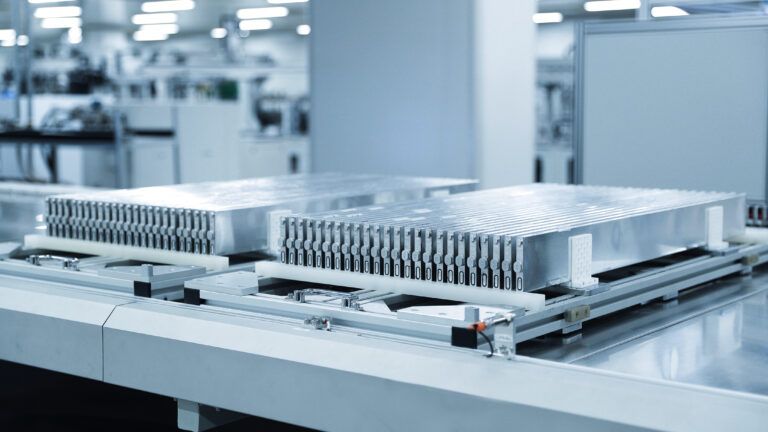
The blade-shaped cell design functions as a structural component, improving vehicle rigidity while reducing battery volume by 50 percent compared to traditional battery packs. This space efficiency allows manufacturers to optimize cabin dimensions and vehicle packaging.
BYD cites the SEAL Design model, which achieves a combined driving range of 570 kilometers, and the SEALION 7 Excellence AWD, which features high-speed DC charging capabilities, as examples of the technology’s performance characteristics in current production vehicles.