


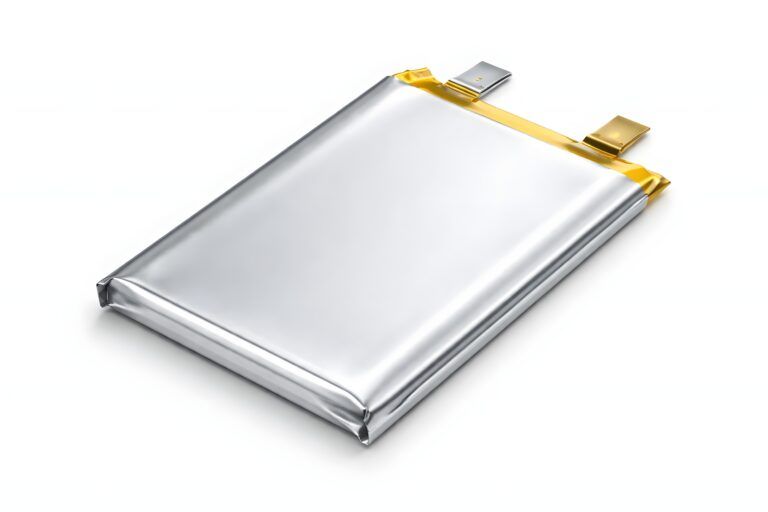
Researchers at Tianmushan Laboratory, Beihang University and Tsinghua University have published a study in Nature Communications detailing lithium metal pouch cells reaching 602.5Wh/kg energy density. A new electrolyte additive suppresses lithium dendrite growth during high-voltage cycling. The technology is lab-stage, targeting applications like drones and eVTOL aircraft.
Researchers from Tianmushan Laboratory in Hangzhou and Beihang University in Beijing have developed lithium metal pouch cells with an energy density reaching the 600 Watt-hours per kilogram (Wh/kg) level, according to a peer-reviewed study published in Nature Communications on August 24, 2026. A researcher from Tsinghua University’s department of chemical engineering, Kai Liu, is among the paper’s four corresponding authors.
The study addresses the electrolyte design of lithium metal batteries, a chemistry seen as a route past the density ceiling of today’s graphite-anode lithium-ion cells. Higher energy density is a priority for the growing drone and electric vertical take-off and landing (eVTOL) aircraft sector, where flight time is limited by how much energy a battery can store per unit of weight.
Lithium metal batteries have historically been difficult to commercialize because their electrolytes can break down and lithium dendrites can form on the anode during high-voltage cycling, creating safety risks and shortening cell life. Most existing electrolyte designs that widen the operating voltage window do so by consuming anions, which reduces lithium-ion conductivity, according to the paper.
The researchers instead designed an electrolyte additive that preferentially sacrifices itself rather than the anions during cycling. Even in trace amounts, the additive coordinates within the inner layer of the lithium-ion solvation structure, which the authors say limits consumption of anions and solvent while forming a more robust protective layer on the electrodes.
In testing, a 10Ah pouch cell pairing a lithium metal anode with a high-nickel NCM811 cathode reached an energy density of 550.7Wh/kg and retained 80 per cent of its capacity after 180 charge cycles at a 0.1C charge / 0.5C discharge rate. A second cell using a lithium-rich manganese-based layered oxide (LRMO) cathode reached a specific energy of 602.5Wh/kg, sustaining 80 per cent capacity retention over 60 cycles at a 0.1C charge/discharge rate.
The technology remains at laboratory scale. The paper does not give a timeline for commercial development.
For comparison, Chinese battery maker CATL has previously detailed condensed matter batteries for eVTOL applications with an energy density of up to 350Wh/kg, a figure it has described as close to the practical limit for conventional lithium-ion chemistry. CATL has separately said it is researching lithium-air battery technology, which has a theoretical energy density of up to 12,000Wh/kg.