

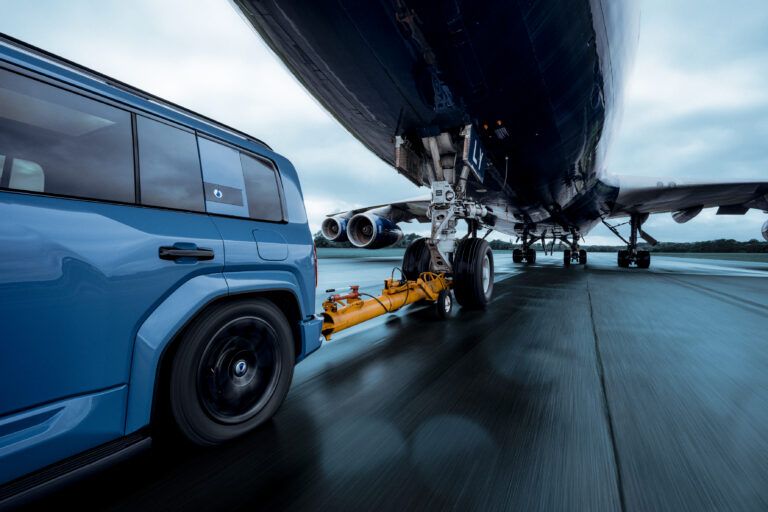
A production DENZA BAO 5 plug-in hybrid SUV towed a 180-metric-ton Boeing 747-400 a total of 1,600 m at Dunsfold Aerodrome in Surrey, UK, finishing on two driven wheels. Its unmodified DMO powertrain produces 544 PS and 760 Nm. Ballast of up to 4,500 kg was added to improve traction.
A production-specification DENZA BAO 5 plug-in hybrid SUV has towed a Boeing 747-400 at Dunsfold Aerodrome in Surrey, UK. For the final run it used only two driven wheels.
DENZA, the premium brand of the BYD Group, says the BAO 5 is the first production car to tow a plane on two wheels and the first to tow a 747 on electric power alone.
The vehicle made three runs: on four wheels, then three, then two. The 747 weighs approximately 180 metric tons. Across the three runs, including stops for filming and for removing wheels, the BAO 5 towed it a total of 1,600 m. The aircraft left active service in 2020 but still has its engines and fully furnished interior.
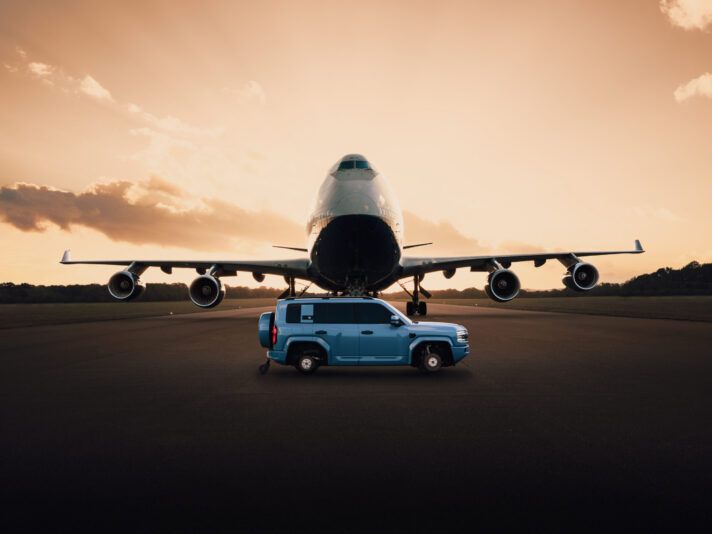
The car was a BAO 5 in Ultimate trim, and the modifications were limited. The team fabricated a bespoke towing attachment and removed the interior passenger seating to make room for ballast. The ballast improved traction and totaled 2,000 kg for the three-wheel run and 4,500 kg for the two-wheel run. Small stabilizers were also fitted to each axle to compensate for the removed wheels.
The DMO (Dual Mode Off-road) plug-in hybrid powertrain was not modified. It uses three electric motors, one driving each axle and a third acting as a generator, alongside a 1.5-liter turbocharged gasoline engine. Total system output is 544 PS (metric horsepower) and 760 Nm. According to DENZA, the powertrain maximizes torque to the driven wheels even when only two are in use. The BAO 5 has an electric-only range of 56 miles and a combined range of 537 miles.
Mark Gallifant, senior technician at BYD UK, drove for all three runs. He had previously towed a double-decker bus fully loaded with passengers.
Practice runs went without difficulty, but torrential rain on the day of the final attempts reduced traction. The team had to wait for the runway to dry enough for the car to get the aircraft moving. According to the company, vehicle checks after each run showed no signs of stress on the powertrain, chassis or tires.