

Designer creates electric concept reimagining Škoda’s first million-seller with windowless rear and modern cooling innovation
A Škoda designer has created a bold electric reinterpretation of the company’s first million-selling car, transforming the beloved 1960s Škoda 100 into a contemporary design study that blends heritage with modern innovation.
Exterior designer Martin Paclt developed the concept to explore how the brand’s defining model could translate into the 21st century. Rather than creating a retro replica, Paclt focused on capturing the original’s spirit through stance, silhouette, and character while applying Škoda’s Modern Solid design language.
The original Škoda 100, produced between 1969 and 1977, achieved landmark status by becoming the brand’s first vehicle to exceed one million sales. Admired for its straightforward engineering, reliability, and personality, the four-door saloon remains a favorite among classic car enthusiasts.
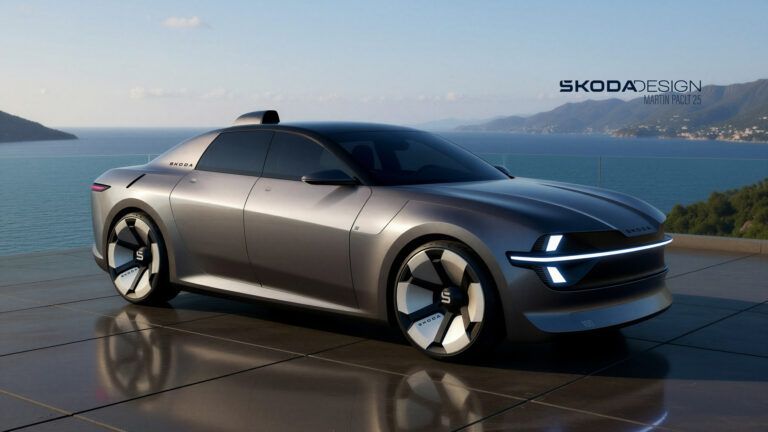
Paclt’s concept retains the simplicity of the classic model through elegant, uninterrupted surfaces and generous volumes. Modern touches include four-element lighting signatures and full-width light strips that subtly reference the chrome accents and distinctive rear vent of the historic version.
The design’s most unconventional feature eliminates the rear window entirely – a decision inspired by the original car’s nearly interchangeable front and rear glazing. “I wanted to explore that connection in a new way,” Paclt said. The windowless rear creates sculptural bodywork that mirrors the front end while enabling practical innovations.
Removing the rear glass allowed integration of a fresh-air intake system above the roofline, supported by discreet vents on the rear wings. “Even an electric vehicle requires cooling,” Paclt explained. The elevated intake positioning also nods to the original Škoda 100’s rear-engine architecture.
The concept builds on the technical package of the current Superb model, which Paclt selected to give the design appropriate scale and road presence. Development began with traditional hand sketches before progressing to detailed 3D modeling.
While Škoda has no production plans for the concept, insights gained during its creation will inform future projects. The design study demonstrates how historical models can inspire contemporary electric vehicle design without relying on nostalgic styling cues.