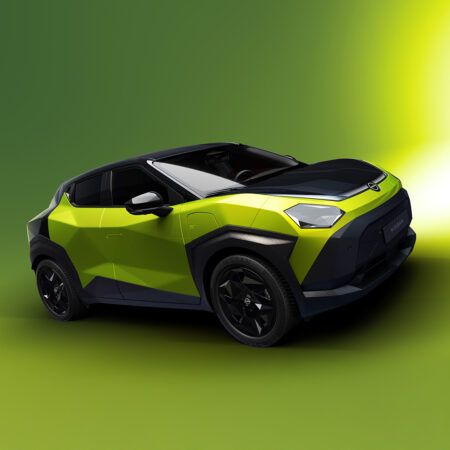


Škoda Auto has delivered over 110,000 electric AWD vehicles since 2020. The Elroq and Enyaq use a dual-motor layout — 210 kW rear PMSM and 80 kW front ASM — with no mechanical link between axles, offering up to 250 kW system output.
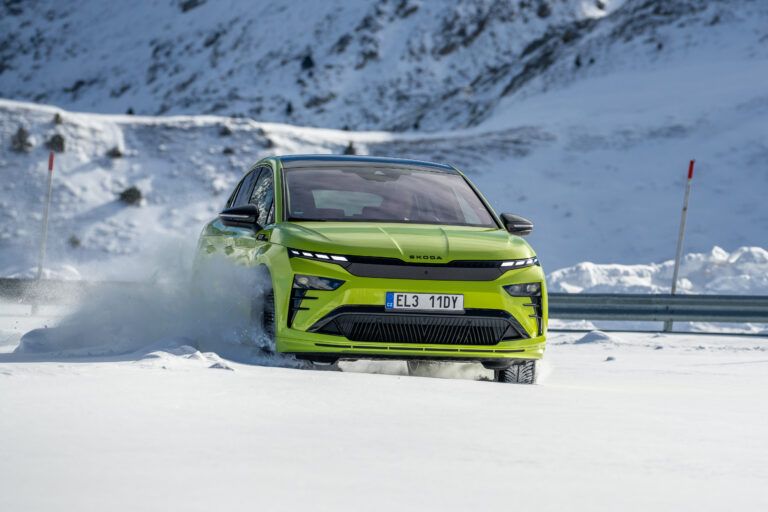
Mladá Boleslav-based Škoda Auto has delivered more than 110,000 all-electric all-wheel-drive (AWD) vehicles since 2020, with its dual-motor Elroq and Enyaq ranges forming the core of the brand’s battery electric 4×4 portfolio.
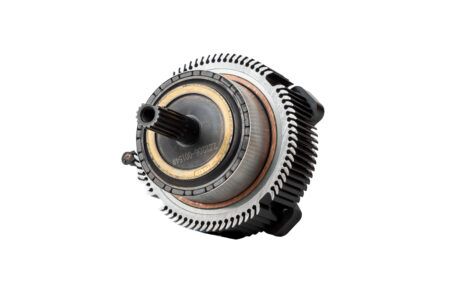
The AWD versions of both the Elroq and Enyaq use a two-motor architecture with no mechanical connection between axles — eliminating the propshaft, clutch and differentials found in combustion-engine AWD systems. A 210 kW permanent-magnet synchronous motor (PMSM) drives the rear axle, while an 80 kW asynchronous motor (ASM) powers the front wheels when additional traction is needed. The ASM is designed to offer short-term overload capability with low friction losses when disengaged, supporting overall efficiency.
Two power outputs are offered across both model families: the 85x version produces a system output of 210 kW, while the RS variant delivers 250 kW. Maximum power is determined in accordance with UN-GTR.21 and varies with battery state of charge, temperature and aging.
“In the all-electric Enyaq and Elroq models, software coordinates the electric motors on both axles to provide AWD performance in all conditions,” says Johannes Neft, board member for technical development at Škoda Auto. “Additional features of our Škoda 4×4 models that further support the driver on demanding surfaces include off-road mode and downhill assistance.”
Demand for the electric AWD models has been strongest in Alpine and Nordic markets. Last year, Škoda delivered almost 7,000 Elroq models with AWD drivetrains, with Germany, Norway and Switzerland representing the highest-demand markets. The Enyaq family with AWD reached more than 30,000 customers, primarily in Germany, Norway and the UK.
Across its full AWD range — spanning combustion, and battery electric models — Škoda delivered a total of 125,895 all-wheel-drive vehicles worldwide in 2025.