

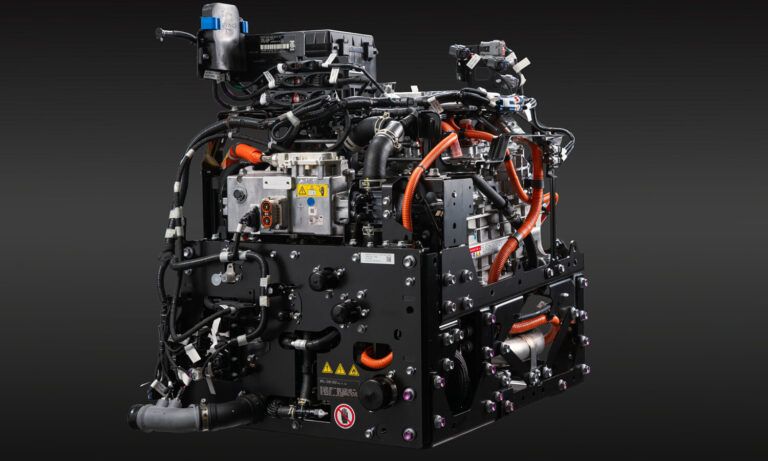
Toyota Hydrogen Solutions has earned ANSI/CSA FC 1 and FC 6 certification for its stationary fuel cell generators, meeting US and Canadian safety standards. The zero-emission systems target applications including grid peak shaving, hospitals and remote off-grid sites. Toyota is also supplying fuel cell modules to Rehlko for 1 MW generators.
Toyota Hydrogen Solutions has received ANSI/CSA FC 1 and ANSI/CSA FC 6 certification for its stationary fuel cell power generators, clearing a compliance hurdle for wider commercial deployment in the US market.
The certifications, issued under standards set by the American National Standards Institute (ANSI) and the CSA Group — a global standards body headquartered in Canada — validate the safety and performance of Toyota’s fuel cell systems for stationary power generation use cases including grid support, critical infrastructure and off-grid applications.
“With our stationary Toyota fuel cell earning ANSI/CSA FC 1 and FC 6 certifications, there’s now a significantly lower barrier to adoption,” says Thibaut de Barros Conti, vice president at Toyota Hydrogen Solutions. “These rigorous certifications should put customers at ease when it comes time for their businesses to make investments into more environmentally conscious power generation.”
Toyota’s fuel cells generate electricity through an electrochemical reaction combining gaseous hydrogen and oxygen, producing only water vapor at the point of use. Stationary fuel cell generators are often subject to fewer operating restrictions than internal combustion alternatives due to their zero carbon emissions and lower noise output, and can run continuously as long as hydrogen fuel is available.
That continuous operation capability makes them suitable for peak shaving — supplementing grid supply during periods of high demand — as well as providing power to remote sites such as disaster response locations or facilities without grid connections. Hospitals and other critical infrastructure are also cited as target applications.
Toyota has been developing fuel cell technology for several decades, and has expanded its focus beyond automotive applications into commercial trucking, port equipment and stationary power generation.
Last year at the Advanced Clean Transportation (ACT) Expo, Toyota announced a collaboration with Rehlko — formerly Kohler Energy — under which Rehlko will use Toyota fuel cell modules to power 1 MW generators. Rehlko describes itself as a global leader in energy resilience.