

CATL founder Robin Zeng is pitching AI-driven materials research, standardized battery swapping, eVTOL cells and low-carbon power systems as one connected strategy. But how readily can these technologies be translated into reliable, repeatable deployment?
For the last decade, the competitive language of EVs has been dominated by familiar measures: kilowatt-hours, range, charging speed and battery cost. Those metrics still matter, but the next phase of electrification is asking a broader question. Can a battery supplier help design the infrastructure, digital intelligence and energy systems around the vehicle as well as the cell within it?
CATL is making a determined case that it can. Across a series of appearances in October and November 2026, founder, chairman and CEO Robin Zeng set out a strategy connecting AI-enabled materials discovery, standardized battery swapping, emerging electric aircraft and integrated low-carbon power systems. The common element is not a single chemistry or product launch; it is the attempt to make batteries a flexible component of an increasingly interconnected energy economy.
The strategy is ambitious and not all its elements are equally mature. Yet the scale of CATL’s existing automotive and stationary-storage business gives its proposals relevance beyond a laboratory roadmap. The crucial issue for vehicle engineers, fleet operators and energy planners is how readily these technologies can be translated into reliable, repeatable deployment.
Lab partner
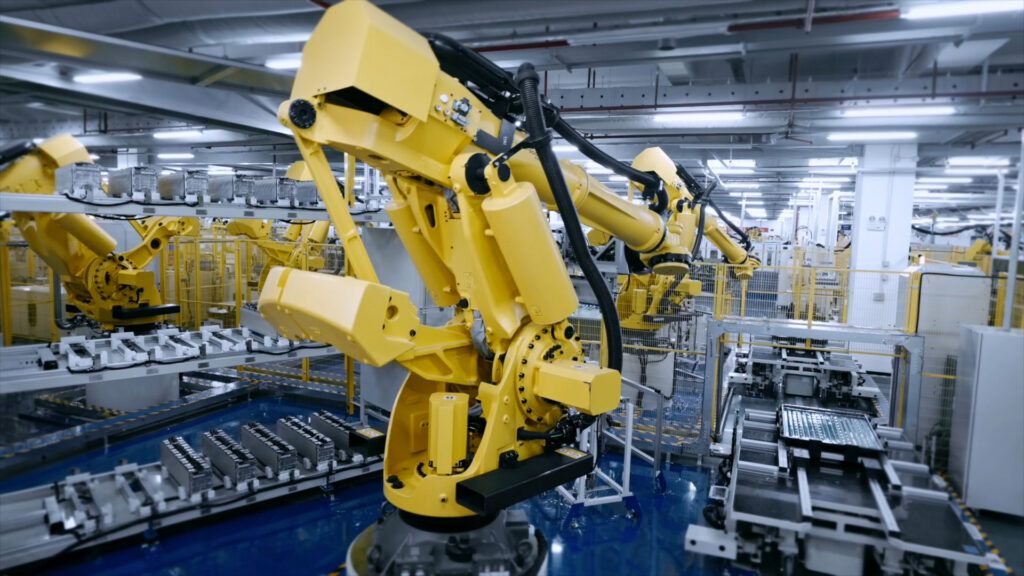
Battery innovation is an unusually demanding problem for artificial intelligence. Chemical reactions develop over extremely short timescales, while a commercial energy-storage system may be expected to deliver service over decades. Discoveries at molecular scale must ultimately be translated into consistent manufacturing, vehicle operation and pack-level safety.
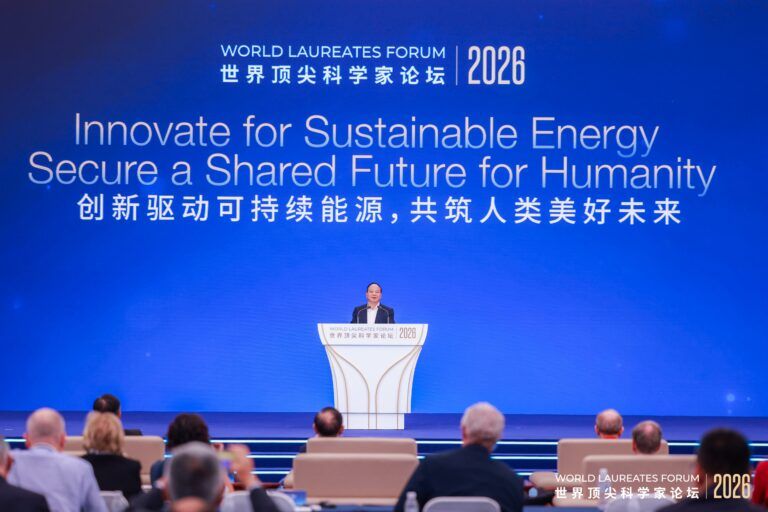
At the World Laureates Forum in Shanghai on October 31, Zeng described CATL’s efforts to connect computational investigation with physical experimentation. According to the company, its AI-native research program draws on approximately 600TB of data and more than one trillion testing data points, linking a “dry lab” for simulation and screening with a “wet lab” for experimental validation. CATL says the approach has screened more than 1,600 compounds and identified seven promising material candidates.
The figures are noteworthy, although they describe research throughput rather than proven commercial cell performance. A candidate material must still pass tests for cycle life, manufacturability, thermal behavior, cost and long-term stability. The real value lies in combining AI-driven screening with experimental validation, helping researchers identify promising materials and accelerate the development process.
That distinction is central to Zeng’s thinking. In an interview conducted by Bloomberg on the sidelines of APEC, he discussed the limitations of language-oriented models and the longer-term ambition for what he called an “AI Einstein”: a scientific model capable of generating deeper physical insight. CATL says it is pursuing that direction, but Zeng acknowledged that its present results remain preliminary. For engineers, the nearer-term opportunity is more concrete: using data, simulation and laboratory feedback to narrow experimental choices and shorten development cycles.
Swap shop
If AI changes how batteries are developed, swapping could change how their value is delivered. At the November 17 APEC CEO Summit in Shenzhen, Zeng highlighted CATL’s 99-second passenger-car battery exchange as an example of business-model innovation. A separate company release stated that, by the end of September 2026, CATL had established 2,520 battery-swap stations across 200 Chinese cities. The figure is company-reported and should not be confused with a count of stations serving only passenger cars.
In the Bloomberg interview, Zeng highlighted the importance of automaker partnerships in expanding battery swapping. At the time of publication, CATL had partnered with 11 vehicle manufacturers, covering 25 passenger-car models through its Choco-Swap network. Bloomberg noted that expanding model compatibility will be key to scaling the battery-swapping ecosystem, although the current lineup still represents only a fraction of China’s EV market.
The time spent inside a swap bay is only one part of the proposition. A functioning network needs suitable vehicles, interoperable battery dimensions and interfaces, battery ownership and finance structures, inventory management, diagnostics and a viable level of station utilization. The economics depend not simply on how fast a pack can be removed, but on how frequently a shared asset can generate value across different vehicles.
For the customer, the model also changes who manages the battery. Under a battery-as-a-service arrangement, the operator can take responsibility for packs that need inspection, maintenance or replacement, while the driver can retain conventional charging as an alternative. For manufacturers, however, shared-pack compatibility creates design constraints and demands alignment across brands. Commercial success will require evidence on the total installed cost of stations, subscription pricing, spare-battery inventories and real-world throughput – not only headline swap times.
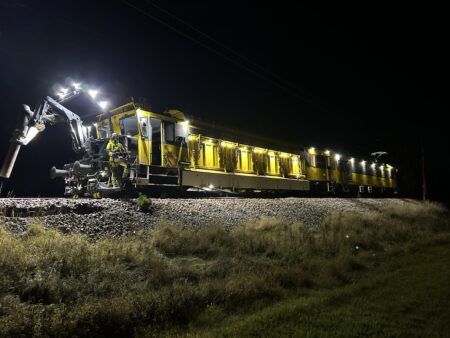
The calculus may be especially attractive for commercial vehicles, where downtime is directly tied to revenue. CATL’s Qiji heavy-truck solution is presented in its company materials as a modular swap architecture with a nominal five-minute replenishment time. The company says more than 300 Qiji stations were built in China during 2025.
That is a real engineering consideration, but it should not be taken to mean that swapping is inherently more efficient in every application: charging curves, thermal systems, station storage losses, battery transport and utilization all affect the comparison. CATL’s approach is to develop both faster charging and swapping, allowing duty cycle and infrastructure conditions to determine the better fit.
Taking flight
Electric vertical take off and landing (eVTOL) aircraft impose a very different set of constraints from passenger cars. Battery mass affects useful payload and range, while take off and landing demand high power, consistent thermal performance and robust fault management. An automotive pack’s success cannot simply be transferred to a certified aviation application.
At APEC, Zeng said CATL was targeting battery energy density of at least 350Wh/kg to support eVTOL aircraft. This is an R&D target cited in his remarks, not a certification of an aircraft-ready pack at that value. CATL’s 2026 corporate introduction also says that its cargo aviation battery developed for AutoFlight passed a manufacturing conformity review by China’s civil aviation authority in 2025 and attained AS9100D quality-system certification. Those milestones are important indicators of process maturity, but airworthiness approval applies to defined products and operating conditions; it should not be inferred for all CATL aviation batteries or aircraft.
The company highlighted low-altitude transport at its Asia-Pacific luncheon, citing a 150km offshore-platform supply journey completed in 58 minutes and a five-aircraft formation flight over 133km in 47 minutes.
Power play
The same system-level logic extends beyond transport. Renewable generation and electrified mobility create demand for storage that can absorb variable supply, provide grid support and potentially interact with vehicles and charging stations. At a November Asia-Pacific business luncheon, CATL described facilities combining battery swapping, high-power charging and vehicle-to-grid or station-to-grid interaction. The opportunity is to make replenishment sites part of the wider power system rather than treating them as isolated service points.
The company also participated in “The Storage+ Paradigm for System Integration”, an energy-transition report led by the International Renewable Energy Agency with contributions from more than ten organizations. CATL said projects it supported in Australia, Chile and the Philippines were recognized through the Global Initiative for Energy Storage.
This is also where CATL’s ambitions intersect with the growth of AI computing. In his Bloomberg interview, Zeng described conversations about supplying power systems for AI data centers, including applications with rapidly varying loads and potential off-grid requirements. He stressed that the company’s overarching objective remains zero-carbon technology rather than becoming an AI business.
The longer-term concept is a scalable package of renewable generation, storage and control systems capable of providing reliable electricity across the year. In practice, delivering clean power around the clock requires site-specific generation resources, grid links, reserve capacity and careful system economics. These are engineering and commercial problems that cannot be solved with cell performance alone.
Going global
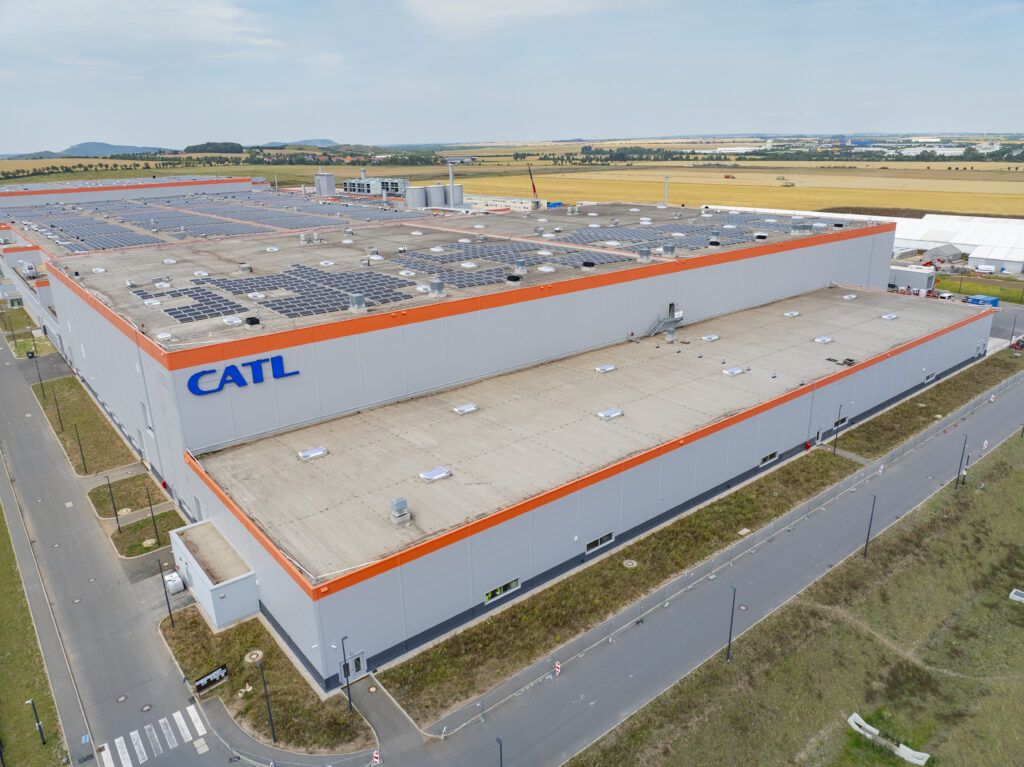
CATL’s worldwide reach helps explain why its proposals attract attention. In its 2026 introduction, the company cites 39.2% of global EV battery usage in 2025, based on SNE Research figures, and 121GWh of energy-storage battery shipments that year. Scale matters because new battery chemistry, aircraft components or swapping standards ultimately require a route from pilot to repeatable manufacture.
International expansion raises questions that are as much institutional as technical.
In the Bloomberg interview, Zeng said CATL remains open to overseas collaborations and technology licensing, emphasizing that partnerships should be judged by their contributions to local markets rather than the nationality of their investors. Citing CATL’s technology-licensing arrangement with Ford, he said the cooperation had broadly met CATL’s expectations, enabling Ford to produce batteries locally in the US for American consumers.
For European OEMs, this points to a pragmatic debate about supply security, industrial capability and cooperation. At the same time, cross-border recycling and material flows remain subject to environmental regulation, logistics and traceability requirements, so any proposed arrangement must be evaluated against the applicable rules.
What emerges from CATL’s latest statements is not a claim that one technology will dominate every application. Passenger cars may need a choice of charging and swapping. Long-haul trucks may place a premium on asset utilization. Aircraft demand exceptional mass efficiency and certification discipline. Power systems must combine batteries with control, infrastructure and generation. And AI, for now, is better understood as an increasingly powerful engineering tool than as a substitute for physics or testing.
The thread linking these sectors is CATL’s willingness to compete at the system boundary: where battery chemistry meets vehicle architecture, where an energy asset meets a charging network, and where manufacturing data meets scientific discovery. If its ambitious research targets and commercial models translate into sustained deployment, the company’s influence could extend well beyond the battery pack. The next measure of success will be how convincingly those systems perform in service.