

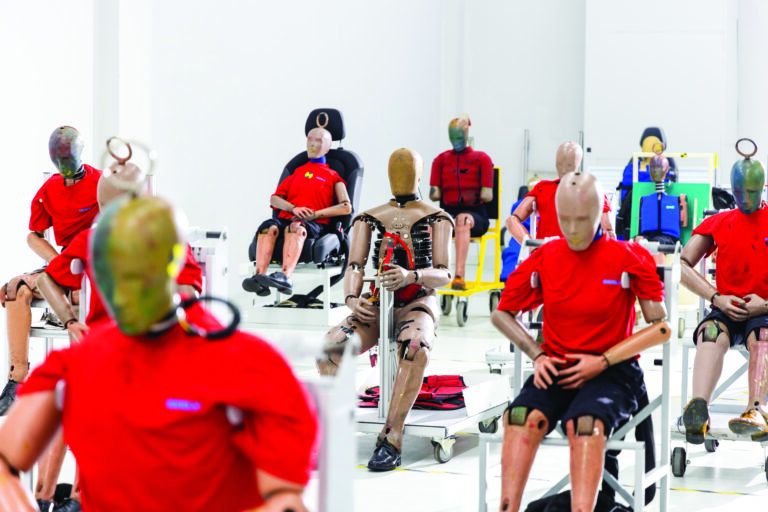
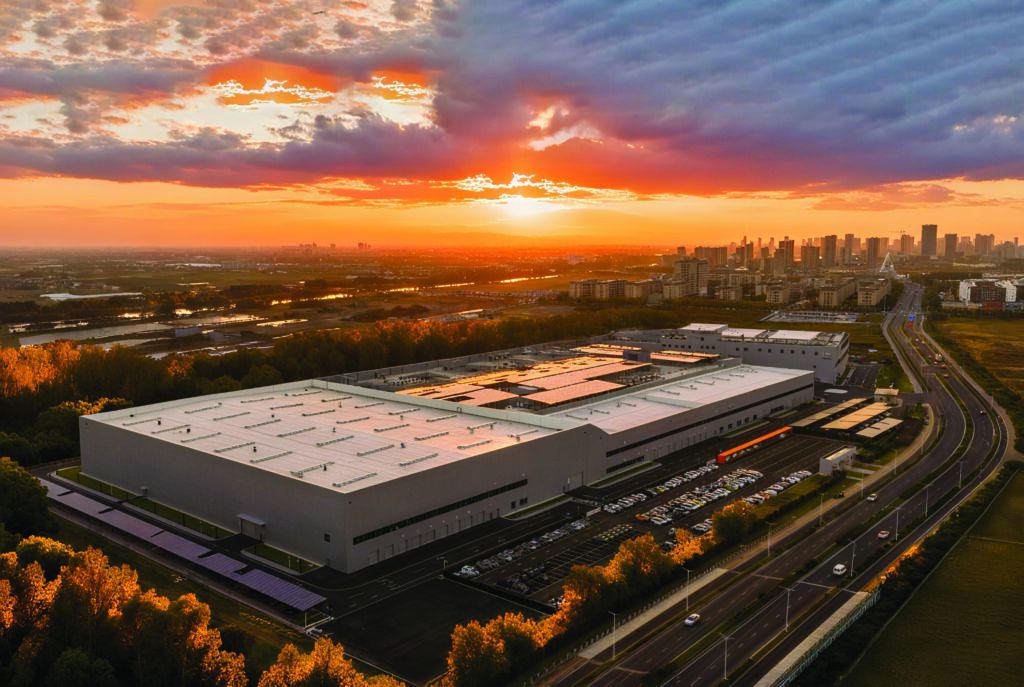
Geely’s $250 million Safety Center in Hangzhou represents a bold statement of intent from China’s rapidly expanding automotive giant. As the company targets 6.5 million annual sales by 2030 – with a third from overseas markets – EHV visits this world-class facility and finds the embodiment of Geely’s ‘over-design and over-verification’ philosophy
Forty years on from the founding of the company and just shy of three decades since its first car was built, Geely is making massive strides in domestic and international markets. In 2025, group sales exceeded 4 million with 2.29 million of those units new energy vehicles. As well as bolstering domestic sales, its sights are set on growing volume in Europe, the Middle East, South America, Australia and other parts of Asia.
Following the opening of the Geely Safety Center in Hangzhou, China in December 2025, Geely is emphasizing a focus on safety throughout its R&D process as the company expands. “Building the Geely Safety Center was fundamentally driven by our core belief that safety is the number one priority,” says Dayong Zhou, chief safety technology officer at Geely Auto Group. “As new energy and smart technologies deeply merge, the definition of safety and its challenges are changing fast.”
Geely operate on a philosophy of ‘over-design and over-verification’ because, says Zhou, traditional testing that just meets minimum regulatory standards can no longer handle the extreme complexity of real-world driving or future risks.
“We poured over $250 million into this first phase to create a world-class base that is as massive as it is capable. This isn’t just a hardware investment; it’s a physical showcase blending nearly 30 years of Geely’s safety know-how with Volvo’s experience. We are committed to putting every vehicle through extreme, beyond-standard testing before it ever reaches the customer.”
Strategic safety
Beyond merely improving its in-house testing capabilities, the new center is seen as a strategic advantage for group R&D efforts. Over the next five years, the goal is to develop shared new energy architectures covering A to E segments. This target is predicted to reduce R&D cycle time and bring down cost per model by more than 30%.
“Our R&D spending leads the industry,” says Zhou. “Over the past 11 years, we have invested over $35 billion. In fact, Geely is the only automaker to rank in the top 10 for R&D investment among all private Chinese enterprises. That massive funding provides a solid foundation for our constant technological innovation.
Zhou says that The Geely Research Institute has a clear mission: to drive technological breakthroughs and develop new products. “We stick to the philosophy of ‘independent innovation, integrating global wisdom, and mastering core technologies,’” he says. “We are guided by four key strategies: platform-based development, safety first, energy diversification, and intelligent technology. Based on these, we have built a comprehensive global R&D system.”
Under the Geely brand, models are primarily designed for the domestic market and feature one of five powertrain options: gasoline, electric, hybrid, methanol fuel cell and battery swapping. As the brand continues to launch in international markets, local validation becomes an important aspect to tailor vehicles to their end destination.
Michael Yang, general manager of Geely Auto UK, says, “Because our development procedures are shared by all the brands in the Geely family, we can support and guarantee the quality of new technology and ensure it is mature enough for the market.”
For UK-tailored models like the newly-launched Starray EM-i PHEV, that means market-specific testing times. “UK road conditions and customer driving habits are very different from other countries and very different from China,” say Yang. “So, for each model, before we launch, we will have a certain period of time to do the testing and validation in the UK. Sometimes we will choose to work with professional engineering companies in the UK to support us to do the local validation. For example, for the EX5 and the Starray EM-i, we worked with Lotus Engineering and the Lotus Innovation Center to do the local tuning.”
Global practice

While the collaboration between brands is not intended to be a marketable selling point for Geely-branded cars in UK and European markets, the company is leveraging this expertise as a key advantage over competitors who lack the experience of established local engineering capabilities.
Explaining the way the new testing facilities fit into the company’s global R&D structure, Zhou says, “The Geely Safety Center is the core hub of our entire global R&D and testing network. First, in terms of philosophy and standards, it forms the ‘world safety dual-pole’ together with the Volvo Safety Center. This ensures we are aligned with the world’s highest safety standards right from the start.
“Second, it works in sync with the rest of our network. We have five major R&D centers and 16 testing bases covering extreme environments worldwide. It means that any of our global models can go through the toughest, most extreme safety tests right here, and then be sent out into the world for that final, adaptive trial by fire. It effectively puts our strategy of ‘global standards, local adaptation’ into practice.”
When it comes to the selection of models for international markets, localized trends play an important role in deciding which powertrains and body types to choose. In the UK, Geely launched with the fully electric EX5 SUV first, before following with the Starray EM-i PHEV.
Later in 2026, China’s best-selling car of 2025, the Geely EX2 (Geome Xingyuan) will make its UK debut. Towards the end of last year, Geely was achieving sales of circa 50,000 EX2 units every month. Volume models in domestic and international markets are expected to improve the company’s opportunities to optimize cost across its manufacturing operations.
“For UK models, I have two principles,” says Yang, “The first is to select the model with the latest technology and the second is to select models with volume in China and overseas markets because in the auto industry, volumes help us to have the cost advantage and quality advantage.”
Future growth
From a manufacturing and safety perspective, heavy investment in automation and efficiency-boosting processes have been considered to help future-proof projected production. By 2030, the group hopes to ramp up to more than 6.5 million vehicle sales annually with over a third being from overseas markets. Over the next five years, Geely also expects around three quarters of its sales to be new energy vehicles.
Discussing how the new safety center is designed to cope with the company’s growth and future technological requirements, Zhou says, “We primarily ensure the center’s forward-looking capability through three key dimensions. First is design philosophy. It wasn’t built just to meet current standards. It was designed to proactively identify and verify future risks. Our ‘over-design and over-verification’ approach is specifically aimed at handling the complexity of the real world and the unknowns of technological evolution.
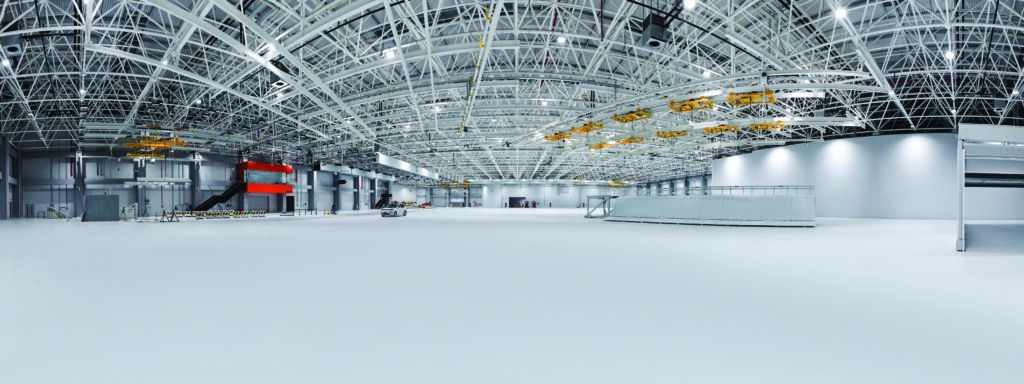
“Second is hardware capability. We have invested in Guinness-certified facilities. These include an ultra-long track, an all-angle crash zone, and a massive climatic wind tunnel. They are built to simulate future, complex traffic scenarios. We designed them to test the extreme safety of next-gen tech. This includes assisted driving and new energy batteries. This infrastructure leaves plenty of room for future innovations.
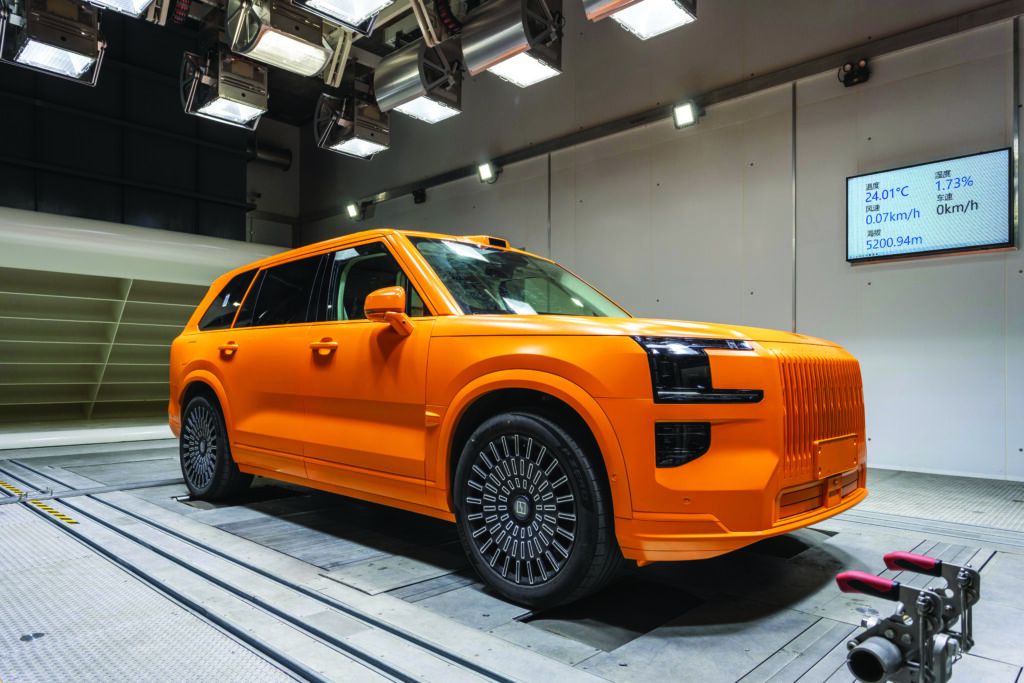
“Third is system inclusivity. We cover 27 major categories of testing, ranging from traditional physical crash tests to safety of batteries, motors, electronic control systems, and digital security. This ‘one-stop’ all-domain capability ensures that no matter how automotive technology evolves, this centre remains the top-tier ‘exam hall’ for its safety verification.”
It certain appears that with Geely’s transformation from a domestic manufacturer to a global automotive its new safety center represents more than just infrastructure investment; it embodies the company’s philosophy to ensure vehicles exceed regulatory standards before reaching customers. As the company continues expanding its global footprint while maintaining its safety-first philosophy, the automotive industry will be watching closely to see how this Chinese manufacturer reshapes the future of sustainable mobility.