
Electric & Hybrid Vehicle Technology International
  • News
    • A-F
      • Battery Technology
      • Buses & Commercial Vehicles
      • Charging Technology
      • Concept Vehicle
      • Electrification Strategies
      • Fuel-cell Technology
    • G-K
      • Hybrid Powertrain
      • Hybrid/electric Architecture
      • ICE Hybrids
      • Industry News
      • Joint Ventures
    • L-Q
      • Manufacturing
      • Materials Research
      • Motor Technology
      • Motorsport Electrification
      • NVH
      • OEM News
      • Powertrain Components
      • Pure-electric Powertrain
    • R-Z
      • Range Extender
      • Solid-state Battery Technology
      • Testing
      • Transmissions
  • Features
  • Online Magazines
    • September 2025
    • June 2025
    • March 2025
    • November/December 2024
    • July 2024
    • March 2024
    • November 2023
    • Archive Issues
  • Technical Articles
  • Subscribe Free
    • Free Email Newsletters
    • Subscribe to Magazine
  • Opinion
  • Supplier Spotlight
  • Webinars
LinkedIn YouTube X (Twitter)
Subscribe to Magazine SUBSCRIBE TO EMAIL NEWSLETTER MEDIA PACK
LinkedIn
Electric & Hybrid Vehicle Technology International
  • News
      • Battery Technology
      • Buses & Commercial Vehicles
      • Charging Technology
      • Concept Vehicle
      • Electrification Strategies
      • Fuel-cell Technology
      • Hybrid Powertrain
      • Hybrid/electric Architecture
      • ICE Hybrids
      • Industry News
      • Joint Ventures
      • Manufacturing
      • Materials Research
      • Motor Technology
      • Motorsport Electrification
      • NVH
      • OEM News
      • Powertrain Components
      • Pure-electric Powertrain
      • Range Extender
      • Solid-state Battery Technology
      • Testing
      • Transmissions
  • Features
  • Online Magazines
    1. September 2025
    2. June 2025
    3. March 2025
    4. November/December 2024
    5. July 2024
    6. March 2024
    7. November 2023
    8. Archive Issues
    9. Subscribe Free!
    Featured
    September 9, 2025

    New issue available now! September 2025

    Online Magazines By Web Team
    Recent

    New issue available now! September 2025

    September 9, 2025

    New issue available now! June 2025

    June 25, 2025

    New issue available now! March 2025

    March 24, 2025
  • Technical Articles
  • Opinion
  • Videos
  • Supplier Spotlight
  • Webinars
  • Events
LinkedIn
Electric & Hybrid Vehicle Technology International
Battery Technology

Chalmers’ structural batteries could reduce EV weight by 25 percent and increase range

Web TeamBy Web TeamJanuary 27, 20262 Mins Read
Share LinkedIn Twitter Facebook Email
Researchers at Chalmers University of Technology in Sweden have developed what they call the "world's strongest" battery.

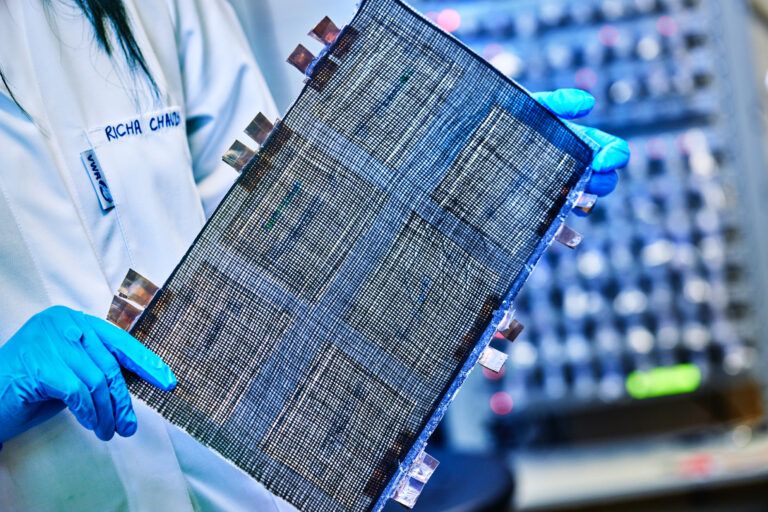
Chalmers University of Technology presented its structural battery technology at Davos that integrates energy storage into vehicle body components. The carbon fiber-based system could reduce EV weight by 25 percent while eliminating separate battery packs, improving range and design flexibility.

Researchers from Chalmers University of Technology in Sweden presented their structural battery technology at the World Economic Forum in Davos, showcasing an innovation that could fundamentally change how EVs are designed and manufactured. The technology integrates energy storage directly into a vehicle’s structural components, essentially making the body of the car function as its own battery.

Structural batteries combine load-bearing capabilities with energy storage by embedding battery cells within composite materials such as carbon fiber. Unlike conventional batteries that add weight and occupy dedicated space within a vehicle, structural batteries serve dual purposes as both energy storage and structural support, reducing overall mass while maintaining or improving mechanical strength.

The technology developed at Chalmers uses carbon fiber as both an electrode and a structural reinforcement material. The carbon fiber acts as the negative electrode while a lithium iron phosphate coating on aluminum foil serves as the positive electrode, with a fiberglass fabric separator between them. This configuration allows the material to store electrical energy while simultaneously bearing mechanical loads.

For EVs, the implications are significant. By eliminating the need for separate battery packs housed in dedicated enclosures, structural batteries could reduce vehicle weight by up to 25 percent according to Chalmers researchers. This weight reduction directly translates to extended driving range, as less energy is required to move a lighter vehicle. The technology also frees up interior space currently occupied by conventional battery packs, potentially allowing for more flexible vehicle designs or increased passenger and cargo capacity.

The current prototype delivers an energy density of 24 watt-hours per kilogram, which is lower than conventional lithium-ion batteries that typically achieve 250 to 300 watt-hours per kilogram. However, researchers emphasize that the structural benefits offset this lower energy density. When accounting for the elimination of separate structural components and battery housings, the overall system-level benefits become more favorable.

Chalmers researchers indicated that commercial applications could emerge within several years, though significant development work remains to improve energy density and manufacturing scalability. The presentation at Davos aimed to attract investment and partnerships to advance the technology toward mass production.

Share. Twitter LinkedIn Facebook Email
Previous ArticleHonda to end fuel cell production at GM joint venture facility
Next Article Commission issues recommendations for UK battery industry
Web Team

Related Posts

Buses & Commercial Vehicles

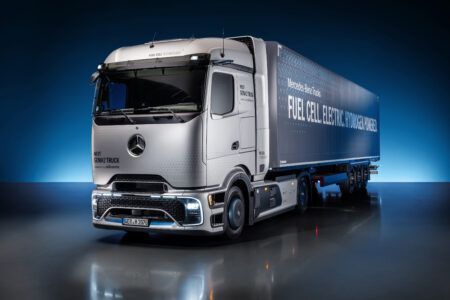
Mercedes-Benz hydrogen fuel cell trucks enter production phase

January 27, 20263 Mins Read
Manufacturing

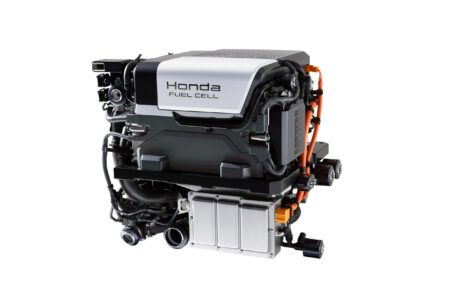
Honda to end fuel cell production at GM joint venture facility

January 27, 20262 Mins Read
Concept Vehicle

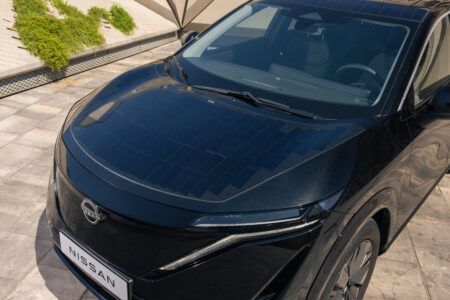
Nissan tests solar-charging technology for EVs with Ariya prototype

January 27, 20263 Mins Read
Latest Posts

Mercedes-Benz hydrogen fuel cell trucks enter production phase

January 27, 2026

Hydrogen fuel cell and battery-electric locomotives emerge as alternatives for non-electrified rail routes

January 27, 2026

Commission issues recommendations for UK battery industry

January 27, 2026
Our Social Channels
  • YouTube
  • LinkedIn
Getting in Touch
  • Free Email Newsletters
  • Meet the Editors
  • Contact Us
  • Media Pack
FREE WEEKLY NEWS EMAIL!

Get the 'best of the week' from this website direct to your inbox every Thursday


© Copyright 2026 Mark Allen Group. All rights are reserved, including those for text and data mining, AI training, and similar technologies.
  • Cookie Policy
  • Privacy Policy
  • Terms & Conditions

Type above and press Enter to search. Press Esc to cancel.