



Integrals Power has been selected as cathode materials supplier for a £2 million UK government-funded project developing LMFP battery technology for defence and EV applications. Led by Denchi Group, the 30-month programme will produce cells at UKBIC’s Coventry facility, assembled into packs at Denchi’s Thurso, Scotland plant.
Integrals Power has been selected as the cathode active materials supplier for a £2 million UK government-funded project to develop battery technology for defence applications and electric vehicles.
The Milton Keynes, UK-based company will manufacture and supply hundreds of kilos of its patented Lithium Manganese Iron Phosphate (LMFP) cathode material to the 30-month programme, which is led by specialist battery supplier Denchi Group. Funding comes through the Battery Innovation Programme, delivered by Innovate UK and supported by the Department for Business and Trade as part of the government’s Industrial Strategy.
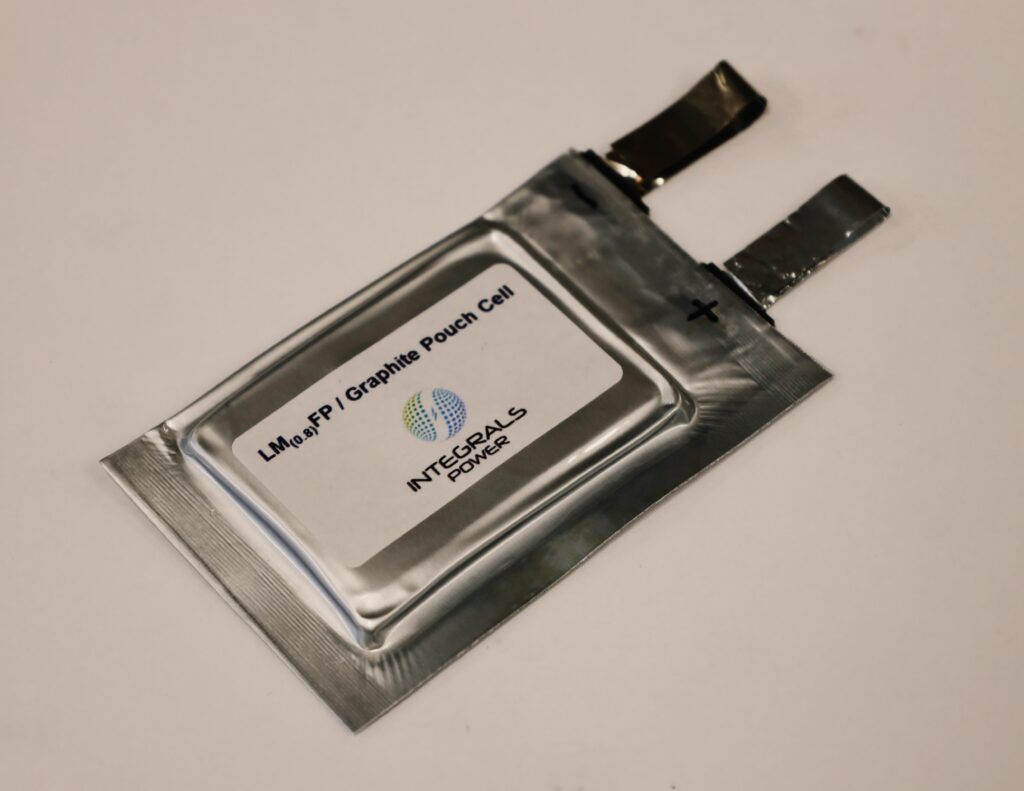
The LMFP material will be produced at Integrals Power’s multi-tonne facility in Milton Keynes and used to manufacture demonstrator cells in pouch and cylindrical formats, including 21700 and 4695 cylindrical sizes. Cell manufacturing will take place at the UK Battery Industrialisation Centre’s (UKBIC) new Flexible Pilot Line in Coventry, before Denchi Group integrates the cells into battery packs at its facility in Thurso, Scotland.
Initial validation trials will use Denchi’s existing BB-2590 design, a ruggedised, waterproof battery pack weighing around 1.35 kg that was developed for military applications including radios, sensor systems, unmanned aerial and ground platforms, and back-up power for aircraft and marine systems. For the trials, the nickel manganese cobalt (NMC) cells currently used in the BB-2590 will be replaced with the new LMFP cells.
According to Behnam Hormozi, founder and chief executive of Integrals Power, LMFP is well suited to the evolving requirements of defence and automotive applications because it eliminates reliance on critical minerals such as cobalt and nickel while delivering higher energy density than lithium iron phosphate (LFP). “We are proud to contribute our materials expertise to a project that is helping to advance secure, sustainable battery technologies in the UK and beyond,” he says.
Integrals Power’s LMFP material has a manganese content of 80 percent, which the company says enables up to 20 percent greater energy density than conventional LFP.
China manufactures most of the world’s LFP cells, according to the source material, and has imposed export licences on LFP cells, materials and manufacturing technology. The International Energy Agency (IEA) estimates that a halt in Chinese supply could cause around $17 billion in lost output from EV plants globally, with Europe accounting for more than half of that figure.
Andrew Cowie, chief executive of Denchi Group, says the company has more than 20 years’ experience supplying the military with British-designed and built battery systems. “Sovereign capability is absolutely paramount, and by working in partnership on this programme with Integrals Power, UKBIC, and the UK government, we are playing our part in delivering exactly that,” he says. “We look forward to building the first LMFP battery packs and getting them out into the field for validation trials.”
Sean Gilgunn, managing director of UKBIC, says the centre’s new Flexible Pilot Line enables customers to scale up their technologies cost-effectively. “Supporting the development of LMFP cells within an integrated UK supply chain is an important step towards strengthening long-term competitiveness in a broad range of sectors, including defence and automotive,” he says.