

BMW Group has contracted Samsung SDI to supply European-made cells and LG Energy Solution to supply US-made cells for its Gen6 high-voltage batteries from the late 2020s. In Europe, they join CATL and EVE Energy. Cells feed five new BMW battery assembly plants in Germany, Hungary, China, the US and Mexico.
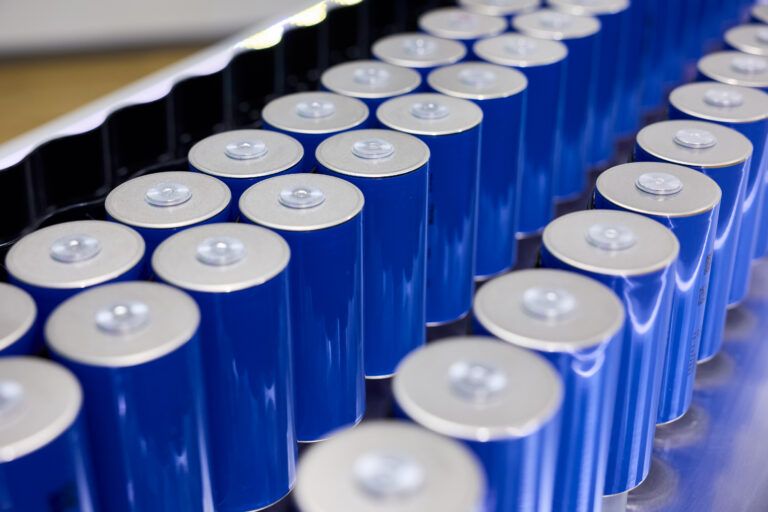
The BMW Group has contracted Samsung SDI and LG Energy Solution as additional battery cell suppliers for its sixth-generation (Gen6) high-voltage batteries. Samsung SDI will supply cells produced in Europe, and LG Energy Solution will supply cells produced in the US.
According to the Munich, Germany-based automaker, both suppliers will deliver from their existing plants in those regions from the late 2020s onwards. BMW has not disclosed contract volumes, values or which supplier plants are involved.
With the latest nominations, BMW will source European-produced cells from CATL, EVE Energy and Samsung SDI. LG Energy Solution joins the company’s cell supply base in the US.
The contracts fall under BMW’s “local for local” purchasing approach, in which the company buys components close to its vehicle production wherever possible to shorten transport distances and improve supply security across Europe, Asia and North America.
“Diversifying procurement is an integral part of the BMW Group’s purchasing strategy. We aim to ensure our products’ global competitiveness and to be successful in different markets. To achieve this, we operate as locally as possible in our value chains, leveraging the potential of our global procurement markets. Through our battery cell partnerships, we are actively strengthening value creation in Europe and the US,” says Nicolai Martin, member of the board of management of BMW AG responsible for purchasing and supplier network.
The same approach applies to Gen6 battery assembly, which takes place at five new facilities BMW has built close to its vehicle plants: Irlbach-Straßkirchen in Lower Bavaria, Germany; Debrecen, Hungary; Shenyang, China; Woodruff, South Carolina; and San Luis Potosí, Mexico.
“Our global partner network with leading cell manufacturers ensures that we have a resilient, flexible and competitive battery cell supply,” says Hendrik Lang, head of purchasing and quality of high-voltage batteries at BMW AG.
BMW says localizing cell production requires significant investment, supply chains developed with technology partners, and those partners’ willingness to set up local operations. The company aims to build regional battery ecosystems over the long term, which it says depends on attractive local conditions and workable political regulation during industrialization periods.
Alongside its supplier network, BMW runs three cell competence centers in Bavaria. The Battery Cell Competence Center (BCCC) in Munich researches new cell technologies for future batteries. The Cell Manufacturing Competence Center (CMCC) in Parsdorf studies how to produce cells at high quality and resource efficiency, and builds and tests near-series cells. At the new Cell Recycling Competence Center (CRCC) in Salching, raw materials are recovered using a direct recycling process developed by BMW and returned to production. Encory GmbH will build and operate the CRCC, while BMW owns the intellectual property for the recycling method.
“Our competence centers enable us to actively shape technological developments and meet our partners on an equal footing,” explains Lang.