

Stellantis, Wayve and Uber have signed a non-binding memorandum of understanding to jointly develop and deploy Level 4 driverless robotaxis globally. Stellantis will build vehicles on its L4-Ready Platforms, Wayve will supply mapless AI driving software, and Uber will deploy the vehicles across its global mobility network and app.
Stellantis, Wayve and Uber have signed a non-binding agreement to jointly develop and deploy Level 4 (driverless) robotaxis at a global scale, the three companies announced on June 17.
The collaboration pairs vehicles built by Amsterdam-based automaker Stellantis on its L4-Ready Platforms with AI driving software from London-based Wayve, deployed across the mobility network of San Francisco-based Uber.
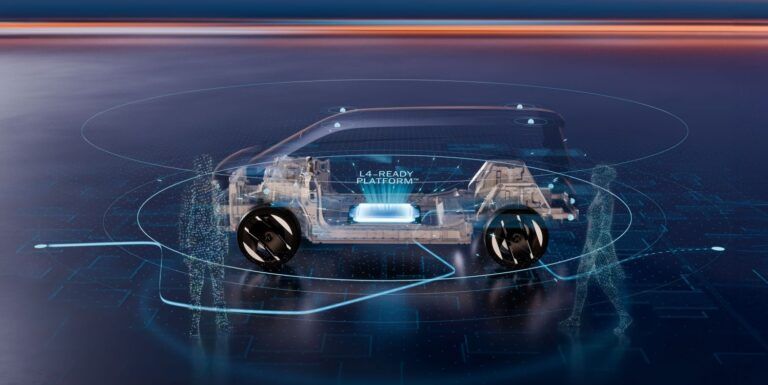
Under the arrangement, Stellantis will design, engineer and manufacture vehicles built on L4-Ready Platforms that carry embedded sensor suites and are engineered with the redundancy required for high-utilization driverless operations. Wayve will supply the AI driving software that enables the vehicles to navigate complex real-world environments autonomously. Built on the company’s end-to-end AI driving approach, the technology is designed to adapt across different regions and driving conditions without relying on city-by-city mapping or re-engineering, which the company says enables faster and more cost-effective expansion.
Uber will deploy the autonomous vehicles on its mobility network, connecting riders to autonomous trips through the Uber app.
The arrangement is structured as a non-binding memorandum of understanding (MoU) establishing a framework for future agreements covering technology development, licensing, production and vehicle procurement. Each company retains the flexibility to pursue additional collaborations in the autonomous driving space.
The partnership builds on existing relationships between the companies, including a recent L2++ agreement between Stellantis and Wayve, and a Wayve-Uber partnership to deploy autonomous rides in London, Tokyo and ten other cities starting this year. As part of the collaboration, the companies plan to work together on vehicle integration, testing, validation and deployment, with the goal of bringing autonomous mobility services to cities across Europe, North America and beyond.
“This collaboration brings us closer to delivering a smarter, safer and more efficient mobility for our customers,” says Ned Curic, chief engineering and technology officer at Stellantis. “By combining our L4-Ready Platforms, designed from the ground up for safe and efficient driverless operation, with Wayve’s adaptive AI and Uber’s global network, we are accelerating the deployment of autonomous vehicles that meet real customer needs and enable seamless mobility at scale in everyday life.”
According to Kaity Fischer, vice president of commercial and operations at Wayve, the arrangement signals industry convergence around the company’s technology. “This partnership brings together three leaders, each with our own strengths: Stellantis’ vehicle expertise, Uber’s global mobility platform and Wayve’s embodied AI,” she says.
Sarfraz Maredia, global head of autonomous mobility and delivery at Uber, says successfully scaling autonomous mobility means bringing together the right vehicles, technology and platform in a seamless way. “Together with Stellantis and Wayve, we’re excited to bring safe, reliable autonomy to more riders around the world,” he adds.