

Volkswagen’s Mission Efficiency² prototype has set three efficiency world records, including a 0.158 drag coefficient, using a drivetrain adapted from the ID. Polo. The near-production electric coupé completed a 1,278 km test drive from Wolfsburg to Vienna on a single charge, with real-world consumption of 7.51 kWh/100 km including charging losses.
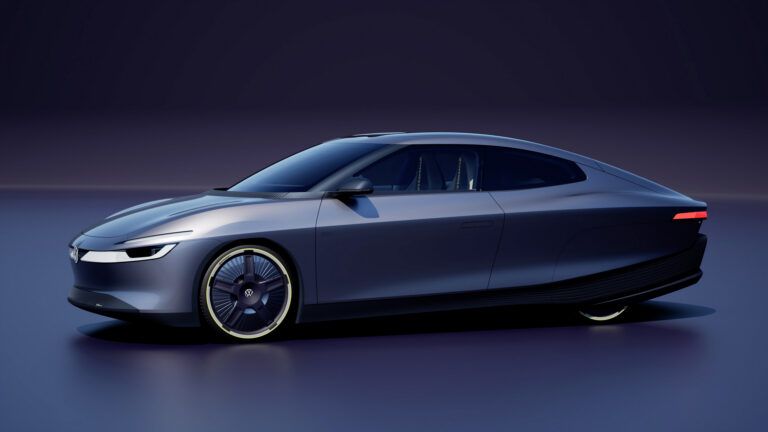
Volkswagen has unveiled the Mission Efficiency², a near-production electric concept car, after the prototype set three world records for aerodynamic efficiency and energy consumption, the company announced.
The vehicle recorded a drag coefficient (Cd) of 0.158, which Volkswagen said is a record for road-approved cars, alongside a frontal area of 2.08 m². It also achieved energy consumption of 6.48 kWh per 100 km during an “ideal trip” test, in which speed was held constant at 68 km/h with no inclines and peripheral systems such as air conditioning switched off. Volkswagen said the car’s aerodynamics and drivetrain, adapted from the ID. Polo, also make it the most economical near-production electric car in its class. The records were certified in the category “near-production four-seater electric vehicle suitable for everyday use” by the Record Institute for Germany (RID).
On a documented consumption test drive of 1,278.36 km from Volkswagen’s development center in Wolfsburg, Germany, via Poznań, Poland, and Olomouc, Czech Republic, to Vienna, Austria, the car recorded real-world consumption of 7.51 kWh/100 km including charging losses, or 6.89 kWh/100 km without them. The route was completed at an average speed of 67.72 km/h, with a top speed of 138 km/h. Its 54.9 kWh (net) battery was charged only once during the journey, and the car arrived in Vienna with 164.0 km of range remaining.
According to Thomas Schäfer, chief executive of the Volkswagen brand, head of the Brand Group Core and a member of the Group Board of Management, the car demonstrates the company’s approach to electric vehicle technology. “Mission Efficiency is the ideal way to demonstrate what distinguishes Volkswagen in the electric age: technology for the masses – not just for the few,” he says. “Rather than using specialist technology, the vehicle set its three world records using affordable production technology from the ID. Polo and ID. Cross, based on the MEB+ platform with front-wheel drive. This shows how much potential efficiency we can add to the latest generation of our electric cars.”
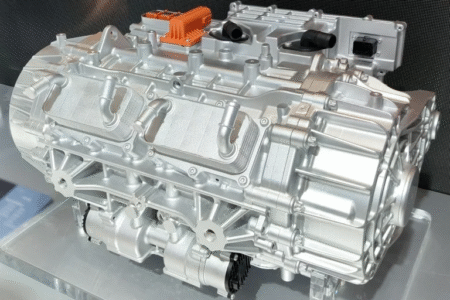
The car uses a 99 kW (135 PS) electric motor and high-voltage battery adapted from the ID. Polo. According to Kai Grünitz, board member for technical development at Volkswagen brand and Brand Group Core, the drivetrain shows what the platform can achieve. “The new Mission Efficiency impressively demonstrates the incredible potential of the drive system in our new ID. Polo,” he says. “Developed for all models based on MEB+ with front-wheel drive, the system is extremely light, very efficient and thus the ideal drive system for our record-breaking vehicle.”
The car’s low aerodynamic drag comes from a teardrop-shaped body, small frontal area, active cooling air flaps, clad rear wheels, a fully clad underbody, frameless door windows and door handles integrated into the body surface. Volkswagen said consumption is more than 30% lower than the standard ID. Polo at speeds above 80 km/h, and that at 140 km/h the car uses about as much energy as the ID. Polo does at 100 km/h.
According to Andreas Mindt, chief designer at Volkswagen, the car’s design connects to the company’s broader EV lineup. “With its front end, the Mission Efficiency slots into our new family of electric vehicles, which also includes the ID. Polo and ID. Cross,” he says. “The shape of the body itself is committed fully to functionality and thus the laws of aerodynamics. This has resulted in a state-of-the-art, efficient sports car in which the DNA of the legendary Volkswagen XL1 shines through.”
Measuring 4,775 mm long and 1,392 mm tall, the coupé has 2+2 seating and 481 liters of luggage capacity, with additional stowage under the rear seats and in the body sides. Its structure combines ID. Polo components with a self-supporting aluminum body and carbon fiber-reinforced polymer (CFRP) and aramid composite parts. At the front, it uses the MacPherson axle and hydraulic brake from the ID. Polo, while the rear uses an electromechanical brake developed with technology company AUMOVIO, which also supplies the ID. Polo’s brake system. The prototype has received European Union (EU) road approval.
Volkswagen said wheels account for 25-30% of a vehicle’s aerodynamic resistance, and developed new rim deflectors and hubcap designs to reduce turbulence. Working with Continental, the company also developed a concept tire based on the EcoContact 7, with a rolling resistance of 4.9 kg per tonne, around 25% below the threshold for the EU’s best tire label class A.
A 370 W photovoltaic system integrated into the glass roof and trunk lid powers onboard electrical consumers and can add up to 30 km of real-world range per day, depending on season, region and weather. The interior uses lightweight panelling, a mobile Bluetooth speaker in place of a built-in sound system, and a “bring your own device” concept in which a smartphone or tablet replaces the infotainment display.
The Mission Efficiency is a concept car and is not for sale.