

Altilium has been granted a UK patent for its EcoCathode process, which recycles end-of-life EV batteries into high-purity cathode materials. The hydrometallurgical technology converts “black mass” into battery-grade materials domestically, reducing reliance on imported minerals. Independent validation from Imperial College London confirms performance comparable to virgin mined materials.
Altilium, a UK-based clean technology company, has been granted its first patent covering its EcoCathode electric vehicle (EV) battery recycling process.
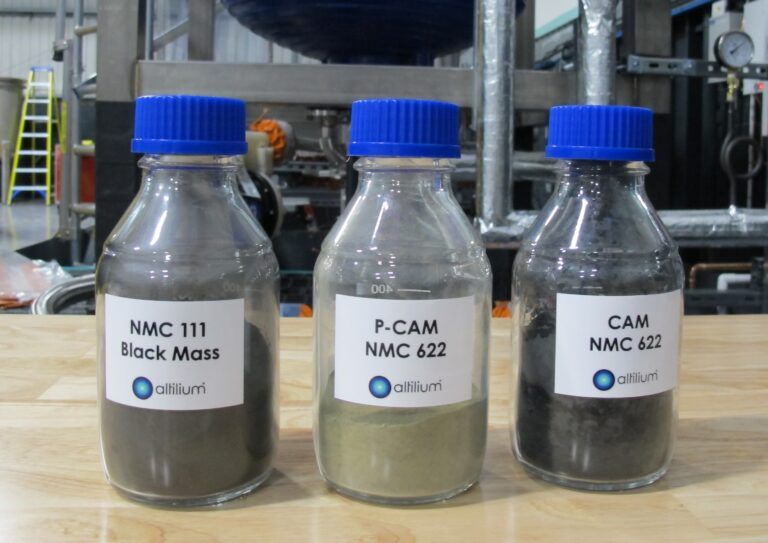
The UK Intellectual Property Office has granted UK Patent No. GB2637908B, titled “Material Recovery Method and Use,” covering Altilium’s hydrometallurgical process for recovering, purifying and regenerating cathode materials from end-of-life lithium-ion batteries. The process converts so-called “black mass” — shredded battery material — into high-purity, battery-grade materials for use in new EV batteries.
The patent forms the basis of a wider international portfolio, with corresponding applications progressing in other jurisdictions, according to the company. Altilium says the patented process differs from conventional recycling routes by recovering and regenerating battery-grade cathode materials within a closed-loop system, rather than producing intermediate products that require further refining overseas.
Altilium states the process has been proven at industrially representative scale through collaborative research and development projects with automotive original equipment manufacturers (OEMs), supported by the Advanced Propulsion Centre. Independent validation by Imperial College London found the company’s recycled materials perform comparably to virgin mined materials.
According to Christian Marston, co-founder and chief operating officer at Altilium, the patent supports the company’s wider strategy.
“This patent represents a significant milestone for Altilium and validates years of research and development into creating a truly circular supply chain for battery materials,” Marston says. “Intellectual property is fundamental to our strategy as we scale our technology from pilot operations to commercial production.
“Our process enables critical battery metals to be recovered and regenerated into battery-grade materials with dramatically lower carbon emissions than traditional mining and refining. This is exactly the type of innovation needed to build a resilient and sustainable battery supply chain for the UK.”
The patent covers technology underpinning Altilium’s wider portfolio, which also spans recovery and regeneration of anode active materials and other critical materials. These processes support the company’s ACT3 commercial plant in Plymouth and a planned ACT4 facility.
Altilium’s pilot plant began operating in Plymouth in 2025. The company’s planned Teesside plant is designed to process scrap from more than 150,000 EVs per year, producing 30,000 metric tons of cathode active material (CAM) annually — enough, the company says, to meet around 20% of the UK’s expected CAM demand by 2030.
Altilium is backed by SQM Lithium Ventures, the venture arm of Chilean lithium producer Sociedad Química y Minera de Chile (SQM), along with Japanese trading group Marubeni Corporation and Mizuho Bank.