

What is wrong with this battery? Most of the time, nobody knows
A technology that can determine the condition of a battery directly where it is operated could fundamentally change how maintenance and lifecycle decisions are made. Miniaturized electrochemical diagnostics now bring this capability directly into production and operation.
Batteries may behave in unexpected ways. Quality issues may appear, reject rates might increase or individual cells might fail without an obvious reason. Production line stops. Batteries are often replaced simply because their age suggests they should be. In many cases, nobody actually knows their real condition.
The reason is simple. Today’s battery monitoring mainly looks at values such as voltage, current and temperature. These parameters are essential for operating a battery safely, but they cannot reliably reveal its condition. This can lead to unnecessary maintenance, premature replacement, production downtime, quality losses and missed opportunities for second-life applications.
What if batteries could tell us what’s going on?
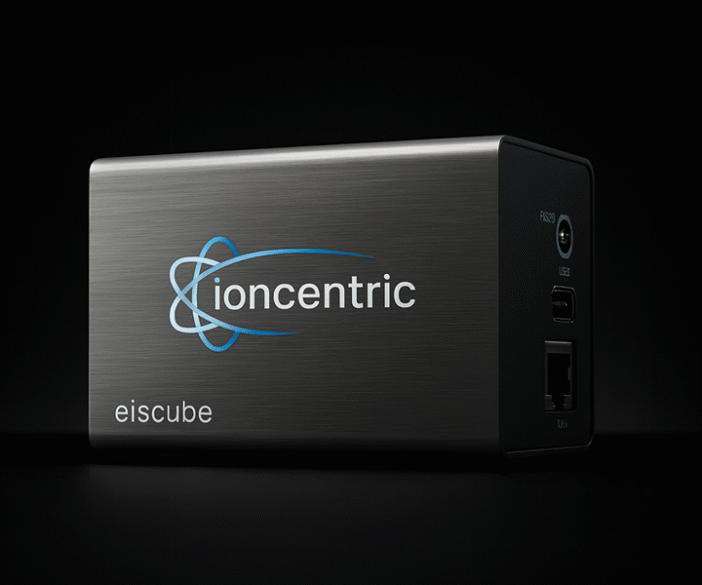
This is exactly what ioncentric developed the eiscube for. It brings miniaturized electrochemical diagnostics directly to where batteries are operated. It reveals aspects of a battery’s condition that remain invisible to conventional battery monitoring. The ioneis cloud converts precise measurement data into clear condition information. Manufacturers receive decision-ready insights instead of raw measurement data. The same condition data also automatically generate Digital Battery Passports with dynamic lifecycle information, providing the transparency required for batteries entering the European market.
With ioncentric’s solution, the ability to understand a battery’s actual condition is only the beginning. These insights enable predictive maintenance based on the actual condition of each battery rather than estimates or fixed maintenance intervals.
From condition data to decisions
Voltage, current and temperature show how a battery behaves. Electrochemical diagnostics explain why it behaves that way.
Consider a production line where reject rates suddenly increase. Voltage, current and temperature remain within specification, yet batteries continue to fail. Without reliable condition data, finding the root cause can take days or even weeks. Electrochemical diagnostics provide the missing information to identify whether the issue originates from the battery itself or elsewhere in the production process. Instead of replacing batteries or searching for faults, manufacturers can identify the actual cause of the problem and take targeted action.
Once the true condition of a battery is known, decisions become much easier. Manufacturers and operators can:
- Detect degradation at an early stage
- Optimize maintenance strategies
- Reduce unnecessary battery replacements
- Minimize production downtime and quality losses
- Identify suitable second-life applications
- Create Digital Battery Passports with dynamic condition data.
Reuse, replace or recycle?
A battery may still have years of useful life left, but nobody can tell by looking at it. With ioncentric’s solution, the same real-time condition information that helps solve production issues also enables reliable decisions throughout the entire battery lifecycle.
- Used electric vehicles become easier to evaluate because buyers and sellers can base their decisions on reliable condition information.
- Companies preparing or buying batteries for second-life applications gain the confidence needed to identify batteries that are suitable for continued use.
- Operators of stationary energy storage systems can reduce technical and commercial risk by selecting batteries based on their actual condition rather than age alone.
They all depend on the same answer: Can this battery still be used?
Reliable battery data improve every lifecycle decision. Knowing the true condition of a battery changes the way decisions are made. Instead of reacting to problems after they occur, manufacturers and operators can act based on reliable information from the beginning.