


MAHLE will premiere a range extender system for heavy electric trucks at IAA Transportation in September 2026, combining battery power with a combustion-engine generator for over 800 km of range. The Stuttgart supplier is also unveiling a rare-earth-free MCT electric motor for heavy truck drive axles.
MAHLE, the automotive component supplier based in Stuttgart, Germany, will present a new range extender system for heavy battery-electric (BEV) trucks as a world premiere at IAA Transportation in Hanover, running September 15 to 20, 2026.
The system combines a battery-electric drivetrain with an internal combustion engine, which MAHLE says is intended to ease the transition from diesel trucks by extending range without relying solely on battery capacity.
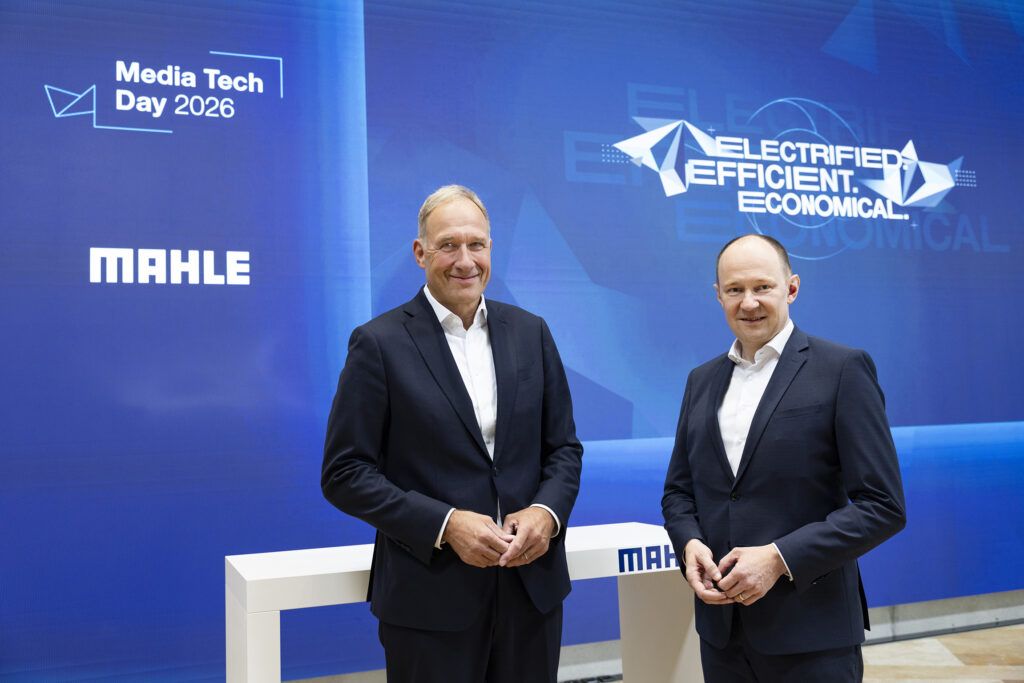
“With high-performance technologies and production-ready products for electrification we are aiming for further growth,” said Arnd Franz, chairman of the group management board and chief executive officer of MAHLE, speaking at a company technology event in Stuttgart.
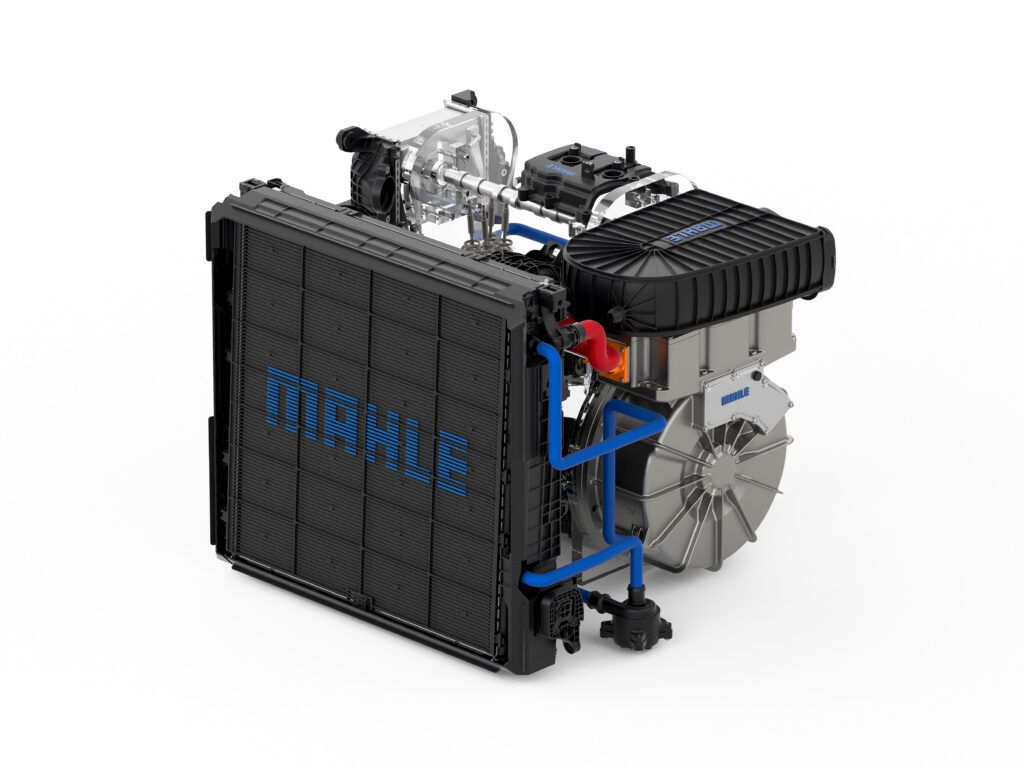
The range extender’s key component is a high-voltage generator with a continuous output of 110 kilowatts (kW) and a peak output of up to 130 kW, driven by a compact internal combustion engine. MAHLE says a newly developed oil cooling system gives the generator a power density of more than 7 kW per kilogram.
The generator, engine, thermal and fluid management systems, fuel tank, AdBlue tank and exhaust gas treatment are packaged into a single unit designed to fit into the standard battery installation space of a battery-electric truck, according to MAHLE. The system replaces about one-third of a battery-electric truck’s existing battery capacity, which MAHLE says allows for a smaller battery, cutting rear axle load by roughly 400 kilograms and total vehicle weight by about 600 kilograms. The company says a range extender BEV truck can reach a total range of more than 800 kilometers (497 miles), split roughly evenly between battery and range extender.
MAHLE says the truck emits about 80 percent less carbon dioxide (CO2) in range extender operation than a truck with a conventional drivetrain under real-world conditions, and can approach zero CO2 emissions if the engine runs on renewable fuels such as HVO100 biodiesel.
“Our range extender is a smart ’emergency power unit’ that is activated at precisely the right moment and significantly increases the range available,” said Dr. Marco Warth, vice president of MAHLE Corporate Research and Advanced Engineering. “If the charging station is busy, or alternative routes are called for as a result of weather conditions or congestion and infrastructure reaches its limits, other fleets can be stranded; an e-truck with range extender just carries on.”
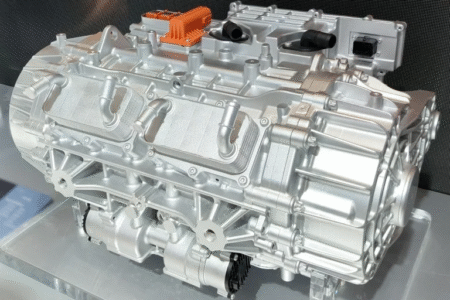
MAHLE is also showcasing a second world premiere at IAA: a MAHLE Contactless Transmitter (MCT) electric motor for the drive axles of heavy commercial vehicles. The motor does not use permanent magnets, meaning it requires no rare earth elements, and MAHLE says it saves up to 3 kilograms of rare earth magnets per vehicle compared with a benchmark permanent magnet synchronous motor (PMSM). The company says the motor is 10 percent lighter and more efficient than permanently excited alternatives under real-world driving conditions, with a peak output of 370 kW, torque of over 900 newton-meters (Nm) at 3,900 rpm, and efficiency of about 95 percent in the EU’s VECTO simulation cycle.
MAHLE says it is present in every battery-electric and fuel cell truck sold in Europe, and is the market leader for electric climate compressors. According to the company, orders for its commercial vehicle business in the first half of 2026 were significantly above the same period last year.
Franz said global internal combustion engine share in commercial vehicles is expected to fall from about 83 percent currently to about 73 percent by 2035, with electric drive systems continuing to grow but remaining a secondary technology in that timeframe. “Technological diversity will be crucial,” Franz said. “Battery-electric vehicles, hydrogen and renewable fuels for internal combustion engines must be used together to reduce CO2 emissions.”