
Electric & Hybrid Vehicle Technology International
  • News
    • A-F
      • Battery Energy Storage Systems
      • Battery Technology
      • Buses & Commercial Vehicles
      • Charging Technology
      • Concept Vehicle
      • Electrification Strategies
      • Fuel-cell Technology
    • G-K
      • Hybrid Powertrain
      • Hybrid Architecture
      • Industry News
      • Joint Ventures
    • L-Q
      • Manufacturing
      • Materials Research
      • Motor Technology
      • Motorsport Electrification
      • OEM News
      • Powertrain Components
      • Pure-Electric Powertrain
    • R-Z
      • Range Extender
      • Solid-State Battery Technology
      • Testing
      • Transmissions
  • Features
  • Online Magazines
    • March 2026
    • September 2025
    • June 2025
    • March 2025
    • November/December 2024
    • July 2024
    • March 2024
    • Archive Issues
  • Technical Articles
  • Subscribe Free
    • Free Email Newsletters
    • Subscribe to Magazine
  • Opinion
  • Supplier Spotlight
  • Webinars
LinkedIn YouTube X (Twitter)
Subscribe to Magazine SUBSCRIBE TO EMAIL NEWSLETTER MEDIA PACK
LinkedIn
Electric & Hybrid Vehicle Technology International
  • News
      • BESS
      • Battery Technology
      • Buses & Commercial Vehicles
      • Charging Technology
      • Concept Vehicle
      • Electrification Strategies
      • Fuel-cell Technology
      • Hybrid Powertrain
      • Hybrid Architecture
      • Industry News
      • Joint Ventures
      • Manufacturing
      • Materials Research
      • Motor Technology
      • Motorsport Electrification
      • Opinion
      • OEM News
      • Powertrain Components
      • Pure-Electric Powertrain
      • Range Extender
      • Solid-State Battery Technology
      • Testing
      • Transmissions
  • Features
  • Online Magazines
    1. March 2026
    2. September 2025
    3. June 2025
    4. March 2025
    5. November/December 2024
    6. July 2024
    7. March 2024
    8. Archive Issues
    9. Subscribe Free!
    Featured
    March 19, 2026

    New issue available now! March 2026

    Online Magazines By Web Team
    Recent

    New issue available now! March 2026

    March 19, 2026

    New issue available now! September 2025

    September 9, 2025

    New issue available now! June 2025

    June 25, 2025
  • Technical Articles
  • Videos
  • Supplier Spotlight
  • Webinars
  • Events
LinkedIn
Electric & Hybrid Vehicle Technology International
Battery Technology

EAS LFP cell boosts power output by 60% with Asahi Kasei’s acetonitrile electrolyte

Web TeamBy Web TeamJune 2, 20263 Mins Read
Share LinkedIn Twitter Facebook Email
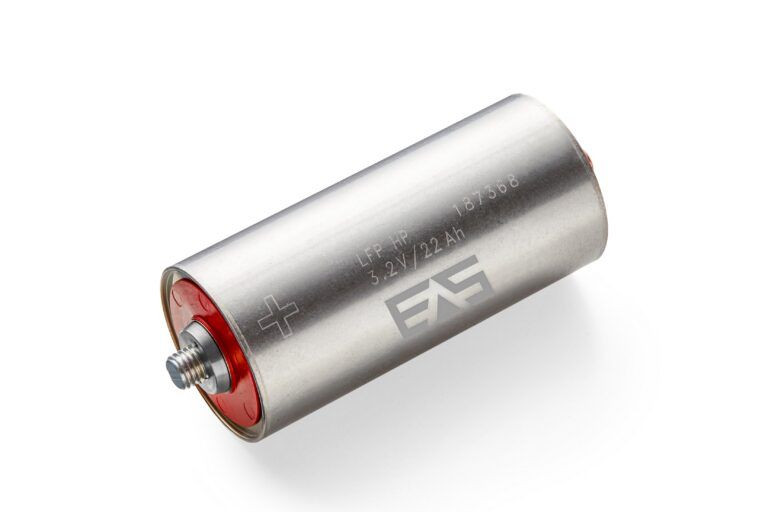
EAS Batteries' UHP-601300-LFP-22 cell, a 22Ah lithium iron phosphate cell rated at 3.2V, which uses Asahi Kasei's acetonitrile-based Acetolyte electrolyte.

EAS Batteries has started sales of its UHP-601300-LFP-22 ultra-high-power lithium iron phosphate cell, which uses Asahi Kasei’s acetonitrile-based Acetolyte electrolyte. The 22Ah cell delivers 2,550W/kg continuous discharge, 60% higher than conventional cells. Both companies are now sublicensing the technology and developing a 46xxx format cell for low-voltage EV batteries, targeted for 2026.

German battery manufacturer EAS Batteries, based in Nordhausen, has started sales of an ultra-high-power lithium iron phosphate (LFP) cell built around Asahi Kasei’s acetonitrile-containing electrolyte, Acetolyte. The cell was initially launched in March 2026.

The UHP-601300-LFP-22 has a nominal capacity of 22Ah and delivers 2,550W/kg under continuous discharge, a 60% increase over EAS cells using conventional electrolytes. Under a two-second pulse discharge, specific power reaches 3,760W/kg, an improvement of roughly 10%. The cell achieves a cycle life of 2,400 cycles at 5C/5C and 100% depth of discharge (DoD) at room temperature, retaining 80% of its initial capacity.

In continuous discharge, the cell reaches 880A (40C) compared with 550A (25C) for the conventional-electrolyte equivalent. Both cell types reach 1,320A (60C) under two-second pulse discharge. According to Asahi Kasei, the electrolyte’s high ionic conductivity reduces internal resistance and improves rate capability, particularly under demanding temperature conditions. The company says the technology also lowers costs and enables smaller battery packs, increasing energy density.

The cell builds on a licensing agreement signed in November 2025, covering use of the Düsseldorf-based chemical company’s electrolyte in EAS’s cylindrical LFP cells. Samples are currently being evaluated by customers across industries.

The two companies have agreed to sublicense their combined technologies to global original equipment manufacturers (OEMs) and battery manufacturers, with the aim of expanding into mobility applications. They are also evaluating the electrolyte for the 46xxx cell format, with a product launch targeted for 2026. Prototypes of the 46xxx cell are already available for testing and are primarily designed for low-voltage electric vehicle batteries.

“Our collaboration on the new 46xxx cell format is also progressing smoothly, underscoring the strength of our joint development approach and our ability to accelerate innovation from concept to market readiness,” says EAS managing director Michael Deutmeyer.

Osamu Matsuzaki, senior executive officer at Asahi Kasei and head of corporate research and development (R&D) and intellectual property (IP), explains the speed of the project: “The short time from signing our license agreement in November 2025 to the start of serial production in March 2026 reflects the focused and highly collaborative efforts between EAS Batteries and Asahi Kasei. Together, we have translated advanced electrolyte technology into a commercially viable high-power cell within just a few months.”

He adds: “Building on this momentum, we are already working on the next cell format and look forward to further advancing high-performance battery solutions.”

Asahi Kasei set out its plans for licensing-based business development in a medium-term management plan announced in April 2025. The company aims to conclude at least 10 new license agreements during fiscal 2025–2027, with a cumulative profit contribution of ¥10bn or more by around 2030.

Share. Twitter LinkedIn Facebook Email
Previous ArticlePolar Semiconductor and Nexperia partner on US-based power MOSFET manufacturing for EVs
Next Article MG returns manufacturing to Europe with new Galicia facility
Web Team

Related Posts

Manufacturing

MG returns manufacturing to Europe with new Galicia facility

June 2, 20263 Mins Read
Motor Technology

Polar Semiconductor and Nexperia partner on US-based power MOSFET manufacturing for EVs

June 1, 20263 Mins Read
Hydrogen Fuel Cell Technology

Bosch Engineering reveals upgraded hydrogen race engine based on Maserati Nettuno V6 for Le Mans

June 1, 20263 Mins Read
Latest Posts

MG returns manufacturing to Europe with new Galicia facility

June 2, 2026

EAS LFP cell boosts power output by 60% with Asahi Kasei’s acetonitrile electrolyte

June 2, 2026

Polar Semiconductor and Nexperia partner on US-based power MOSFET manufacturing for EVs

June 1, 2026
Our Social Channels
  • YouTube
  • LinkedIn
Getting in Touch
  • Free Email Newsletters
  • Meet the Editors
  • Contact Us
  • Media Pack
FREE WEEKLY NEWS EMAIL!

Get the 'best of the week' from this website direct to your inbox every Thursday


© Copyright 2026 Mark Allen Group. All rights are reserved, including those for text and data mining, AI training, and similar technologies.
  • Cookie Policy
  • Privacy Policy
  • Terms & Conditions

Type above and press Enter to search. Press Esc to cancel.